
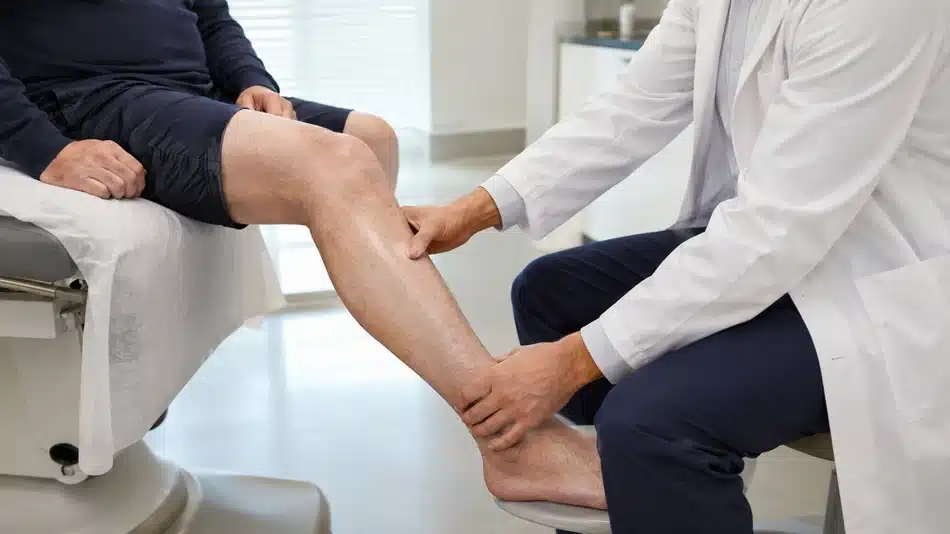
Post-phlebitic syndrome, also known as post-thrombotic syndrome, is one of the most important consequences that may appear after a deep vein thrombosis in one leg.
In our clinic, we often see patients who, after recovering from the acute episode of thrombosis, continue to notice that the leg feels swollen, heavy, painful, or more sensitive when standing. In other cases, the problem appears gradually months or years later, with skin changes, the appearance of secondary varicose veins, or even wounds around the ankle.
It is important to understand something from the start: post-phlebitic syndrome is not a “new thrombosis”, but a chronic after-effect that may remain after a deep vein thrombosis. Its intensity varies greatly from one person to another. Some people have mild, manageable symptoms; others may develop significant venous insufficiency that affects their quality of life.
The good news is that early diagnosis, appropriate follow-up, and well-indicated preventive measures may help control symptoms and reduce the risk of complications.
Contents
- What is post-phlebitic or post-thrombotic syndrome?
- Why it appears: causes and mechanism
- Most common symptoms of post-phlebitic syndrome
- Visible signs: what may appear in the leg
- Why early diagnosis is important
- Progression: what may happen over time
- Possible complications
- Implications in everyday life
- Preventive measures and general care
- What should be avoided
- When to consult a vascular surgeon
- Conclusion
- FREQUENTLY ASKED QUESTIONS
What is post-phlebitic or post-thrombotic syndrome?
Post-phlebitic syndrome is the set of chronic venous symptoms and signs that appear as a consequence of a previous deep vein thrombosis.
To understand it simply, it helps to remember how the veins in the legs work. Veins return blood from the feet back to the heart. To do this, they rely on the calf muscles, which act rather like a pump when we walk, and on internal valves that allow blood to move upward while making it harder for it to fall back down under the effect of gravity.
When a deep vein thrombosis occurs, a clot forms inside a deep vein. With appropriate treatment, that clot may gradually organize, shrink, or even partly disappear. However, even if the clot improves, the vein wall and its valves may be left damaged.
The result may be twofold:
- the vein may remain partially obstructed, making it harder for blood to leave the leg;
- the venous valves may be damaged, allowing some blood to flow back downward.
In both cases, chronic difficulty with venous return develops. Blood moves upward less effectively, pressure builds up in the leg, and symptoms of chronic venous insufficiency may appear.
This is why it is called “post-thrombotic” syndrome: it appears after a thrombosis. It is also called “post-phlebitic” syndrome: the term phlebitis has traditionally been used to refer to inflammation of a vein, although today we usually speak more precisely of superficial or deep vein thrombosis, depending on the case.
Why it appears: causes and mechanism
The main cause of post-phlebitic syndrome is having had a deep vein thrombosis, especially when it affects important veins in the leg or pelvis.
Not everyone who has a thrombosis develops a relevant post-thrombotic syndrome, but a significant proportion do. Several factors may play a role: the extent of the thrombosis, its location, how quickly it was diagnosed, the treatment received, how the clot evolved, the presence of residual obstruction, valve damage, and personal factors such as weight, physical activity, type of work, or adherence to compression when it is indicated.
After a thrombosis, several situations may occur:
1. Residual venous obstruction
Sometimes the vein does not fully recover its diameter. A narrowed or obstructed area remains and makes it harder for blood to pass through. This forces the circulation to find alternative routes, often through collateral veins.
These collateral veins may be useful because they help drain the leg, but they are not always enough to normalize circulation.
2. Damage to the venous valves
The internal valves of the veins are delicate structures. A thrombosis often damages them. If they no longer close properly, blood may flow backward when standing or sitting, increasing venous pressure in the leg.
This is known as venous reflux.
3. Chronic increase in venous pressure
The combination of obstruction and reflux causes pressure within the venous system of the leg to rise, especially when standing. Over time, this pressure may affect the tissues, skin, and microcirculation.
This is when chronic swelling, heaviness, skin discoloration, inflammation, and, in advanced cases, venous ulceration may appear.
Most common symptoms of post-phlebitic syndrome
Symptoms may range from mild discomfort to significant limitations. They usually worsen at the end of the day, with heat, after many hours standing or sitting, and they may partially improve when walking, raising the legs, or using appropriate compression.
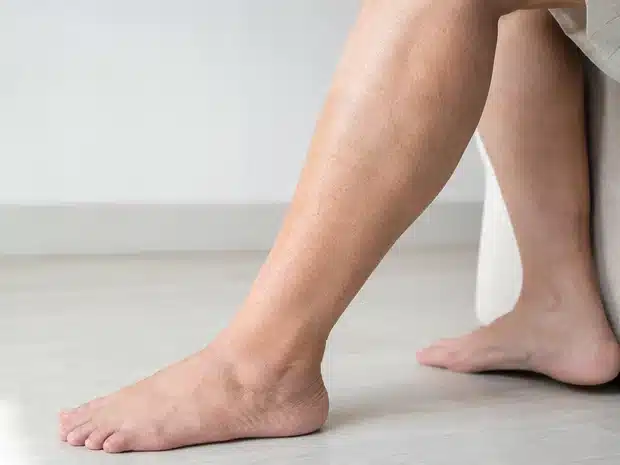
The most frequent symptoms are:
- leg heaviness;
- diffuse pain or discomfort;
- a feeling of tightness;
- swelling, especially in the ankle, leg, or calf;
- cramps;
- itching;
- leg tiredness;
- a feeling that the leg is “heavy” or overloaded;
- worsening with heat;
- discomfort when standing for a long time;
- difficulty walking long distances in more severe cases.
In some patients with advanced syndrome, what we call venous claudication may appear: a sensation of pain, tightness, or intense heaviness when walking, related to significant difficulty in deep venous drainage. It is not the most common situation, but when it appears it should be assessed with particular care.
Visible signs: what may appear in the leg
In addition to symptoms, post-phlebitic syndrome may produce visible changes. Some appear early; others develop over time.
Among the most common signs, we find:
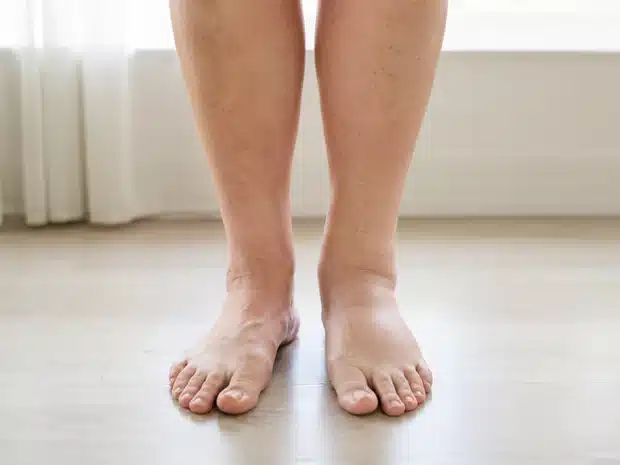
Persistent swelling
The leg may be more swollen than the other one, especially at the end of the day. In early stages, swelling may improve with a night’s rest. In advanced stages, it may become more persistent.
Secondary varicose veins
After a deep thrombosis, some superficial veins may dilate because they act as alternative pathways to help venous return. These varicose veins do not have the same meaning as usual primary varicose veins.
That is why it is important not to treat them without an appropriate vascular study. Very often these veins are helping drain the leg, and simply removing them could worsen the problem.
Skin changes
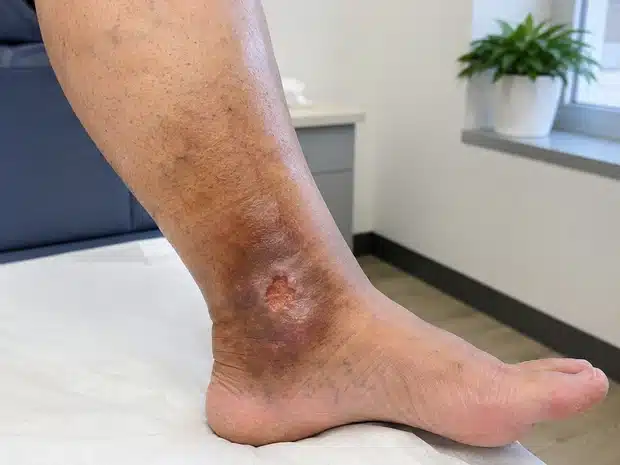
Over time, sustained venous pressure may affect the skin, especially around the ankle. The following may appear:
- brownish pigmentation (ochre dermatitis);
- eczema or irritation;
- dryness;
- itching;
- skin hardening;
- whitish or more fragile areas (skin atrophy);
- chronic inflammation.
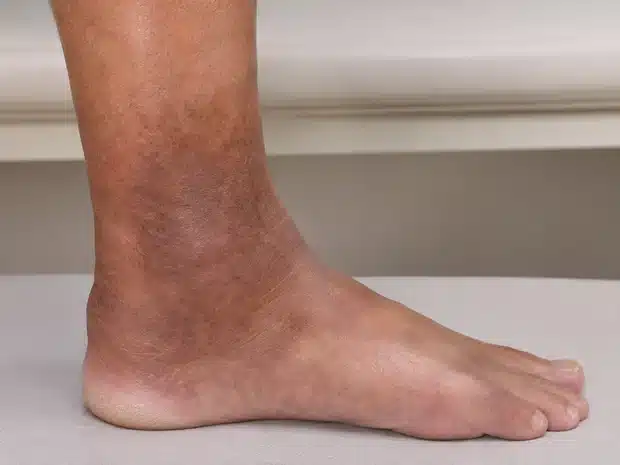
These changes indicate that the venous disease is progressing and should be assessed.
Venous ulcer
The most advanced complication is a venous ulcer, a wound that usually appears around the ankle or lower part of the leg. It may take time to heal and requires specialized management.
Not everyone with post-phlebitic syndrome develops an ulcer, but when chronic swelling, skin changes, and a history of thrombosis are present, prevention becomes especially important.
Why early diagnosis is important
Early diagnosis does not only mean confirming that there has been a thrombosis. It also means assessing how venous circulation has been left after that episode.
In many cases, the patient receives treatment during the acute phase of the thrombosis and, once that initial period has passed, thinks the problem is over. However, some venous after-effects may become apparent over time.
Early diagnosis makes it possible to:
- know whether residual venous obstruction is present;
- assess whether there is deep or superficial venous reflux;
- distinguish between primary and secondary varicose veins;
- identify early skin changes;
- adapt compression if it is indicated;
- guide preventive measures;
- detect cases that require closer follow-up;
- avoid inappropriate treatments on veins that may be playing a drainage role.
The key test in venous assessment is usually the venous Doppler ultrasound. It is a non-invasive examination that allows us to study blood flow, check the condition of the veins, assess whether there is obstruction or reflux, and plan the most appropriate management.
At Clínica Vascular Dr. Jorge Molina, venous Doppler ultrasound is a key tool for understanding the venous problem as a whole, not just for “seeing whether there are varicose veins”.
In more complex cases, especially if involvement of the iliac veins or pelvic veins is suspected, it may be necessary to complete the study with other imaging tests. This should be decided by the specialist according to the clinical history and examination.
Progression: what may happen over time
Post-phlebitic syndrome is a chronic condition. This does not mean that it will always get worse, but it does require follow-up and care.
Progression may be very different from one case to another.
Some patients have mild symptoms during specific periods, for example in summer or after long days standing. Others have recurrent swelling or daily symptoms. A third group develops more advanced complications, with significant skin changes or venous ulcers.
In general, progression may follow this pattern:
Initial phase
There may be a feeling of heaviness, swelling at the end of the day, calf discomfort, or worsening with heat. Very often, the leg feels much better in the morning when getting out of bed, and worsens as the day goes on.
Intermediate phase
Swelling may become more frequent. Secondary varicose veins, mild skin changes, itching, pigmentation, or more persistent discomfort may appear.
Advanced phase
Chronic swelling, skin hardening, persistent inflammation, venous dermatitis, skin atrophy, or venous ulceration may appear.
The aim of vascular follow-up is to act before advanced stages are reached, or at least to reduce their impact if they have already appeared.
Possible complications
The main complications of post-phlebitic syndrome are related to chronic venous insufficiency secondary to the thrombosis.
The most relevant are:
Chronic swelling
Persistent swelling may limit mobility, produce a feeling of tightness, and affect quality of life. In addition, a chronically swollen leg may have more vulnerable skin.
Skin changes
The skin may become inflamed, pigmented, hardened, or more fragile. These changes are not only cosmetic: they indicate tissue distress due to venous hypertension.
Secondary varicose veins
Dilated superficial veins may appear as a consequence of damage to the deep venous system. Let us repeat this: they are not the “normal” varicose veins that 95% of patients have. Their management must be cautious and always guided by a vascular study.
Venous ulcer
This is a chronic wound related to poor venous circulation. It usually requires dressings, compression, specialist follow-up, and, in some cases, assessment of possible treatments on the venous system involved. They are slow and troublesome to heal and, therefore, preventing their appearance is very important.
Impact on quality of life
Post-phlebitic syndrome may affect work, exercise, travel, rest, and daily activities. It may also cause concern, especially if the patient does not understand why the leg continues to cause symptoms after the thrombosis has been treated.
Explaining the problem clearly is part of treatment.
Implications in everyday life
One characteristic of post-phlebitic syndrome is that it is more noticeable in situations that make venous return more difficult.
For example:
- jobs that involve many hours standing;
- long periods sitting;
- long journeys;
- warm weather;
- a sedentary lifestyle;
- being overweight;
- lack of calf muscle activity;
- difficulty using compression stockings;
- conditions that reduce mobility.
This does not mean that a person with post-phlebitic syndrome cannot lead a normal life. On the contrary: in many cases, walking and staying active are part of management. But it is advisable to adapt some habits so the leg works under better conditions.
Preventive measures and general care
Preventive measures do not replace medical assessment, but they may help control symptoms and reduce the risk of progression. They should be individualized in each case, especially when there is a history of thrombosis, anticoagulation, arterial disease, ulcers, mobility problems, or other medical conditions.
Maintain an active lifestyle
Contraction of the calf muscles helps push blood upward. Walking regularly is usually one of the most useful measures.
It does not need to be approached as intense sport. For many people, daily walks, climbing stairs with caution, or interrupting long periods of sitting already brings an improvement.
Avoid prolonged inactivity
Remaining seated or standing for many hours without moving favors venous pooling. If your work allows it, it is advisable to get up, walk for a few minutes, or move your ankles frequently.
During long journeys, ankle flexion and extension exercises and walking whenever possible are recommended.
Raise the legs during rest periods
Raising the legs may help reduce venous pressure and relieve swelling. There is no need to become obsessive about always sleeping with the legs elevated, but resting for a while with the legs raised can be useful if heaviness or swelling appears at the end of the day.
Maintain a healthy weight
Excess weight increases pressure on the venous system and worsens symptoms. Weight loss, when indicated, may improve exercise tolerance, reduce swelling, and make compression easier to use.
Avoid direct heat
Heat promotes venous dilation and may worsen heaviness, swelling, and the feeling of heavy legs. In summer, it is advisable to avoid prolonged sun exposure during the middle hours of the day, saunas, or direct heat sources on the legs.
Cool water may relieve symptoms in some people.
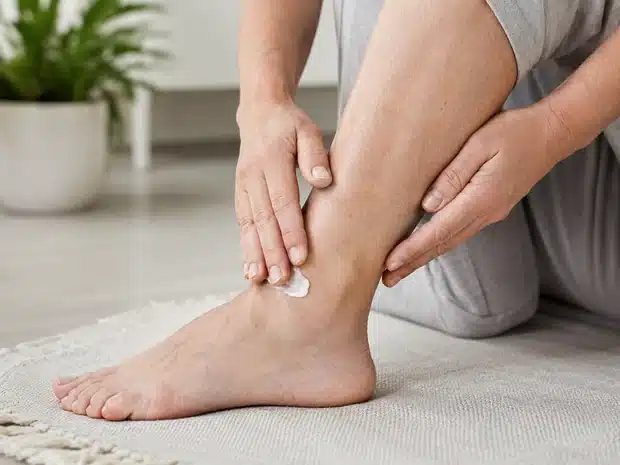
Take care of the skin
The skin of a leg with chronic venous insufficiency may become more delicate. It is advisable to keep the skin well hydrated, avoid intense scratching, and seek advice if eczema, wounds, color changes, or hardened areas appear.
Use compression when it is indicated
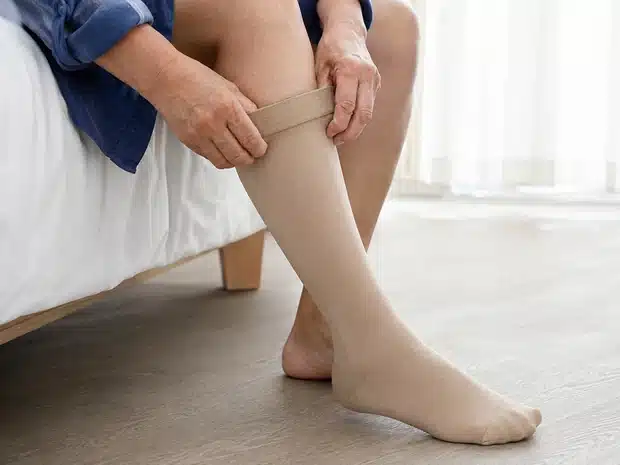
Compression stockings can be a very useful tool, but they must be properly indicated. Not all stockings are the same: size, length, fabric, degree of compression, and, unfortunately, also quality vary.
In post-phlebitic syndrome, compression may help control symptoms, reduce swelling, and protect the skin. But it must be adapted to each patient’s situation and tolerance. A stocking that cannot be put on, causes pain, or is used incorrectly stops being a practical solution.
That is why compression should preferably be prescribed by a professional with experience in venous disease.
Follow the indicated medical treatment correctly
If the patient is taking anticoagulant treatment, or has done so after a thrombosis, decisions about dose, duration, or stopping treatment must be made with the doctor responsible. It should never be changed on one’s own initiative.
Post-phlebitic syndrome is not managed with anticoagulants alone, but a poorly controlled or recurrent thrombosis may increase the risk of after-effects.
What should be avoided
In chronic venous disease secondary to thrombosis, particular caution is needed.
It is not advisable to:
- self-medicate with anticoagulants, anti-inflammatory drugs, or diuretics;
- buy compression stockings “at random” without an appropriate assessment;
- treat secondary varicose veins without a previous venous Doppler ultrasound;
- ignore skin changes around the ankle;
- assume that all swelling is “normal” after a thrombosis;
- stop follow-up if the leg continues to cause symptoms;
- perform intense massage if acute thrombosis is suspected;
- delay consultation if a wound or ulcer appears.
In particular, varicose veins that appear after a deep thrombosis must be studied carefully. Sometimes they may be compensatory drainage pathways. That is why, before considering any varicose vein treatment in a leg with a history of deep vein thrombosis, it is essential to assess the deep venous system, because if it is affected, removing the varicose veins could leave the patient in a worse circulatory situation than before.
When to consult a vascular surgeon
You should consult a vascular surgeon if you have had a deep vein thrombosis and notice persistent or progressive symptoms in the leg.
It is also advisable to request an assessment if any of the following situations appear:
- persistent swelling of one leg;
- a clear difference in size between both legs;
- pain, heaviness, or tightness that limits your activity;
- new varicose veins after a thrombosis;
- skin color changes, especially around the ankle;
- persistent itching, eczema, or irritation;
- skin hardening;
- wounds that take time to heal;
- venous ulcer;
- a feeling of worsening with heat or when standing;
- doubts about which compression stocking to use;
- the need to plan travel, surgery, or other situations involving thrombotic risk;
- a history of repeated thromboses.
You should also seek urgent medical attention if sudden swelling of one leg, sudden severe pain, shortness of breath, chest pain, coughing up blood, or a feeling of fainting appears. These symptoms are not part of routine follow-up for post-phlebitic syndrome and may require urgent assessment.
Conclusion
Post-phlebitic or post-thrombotic syndrome is a chronic after-effect that may appear after a deep vein thrombosis. It occurs because venous circulation in the leg remains altered, either due to residual obstruction, damage to the venous valves, or a combination of both mechanisms.
Its most common symptoms are swelling, heaviness, pain, cramps, itching, and worsening when standing or in heat. In advanced stages it may cause skin changes, secondary varicose veins, and venous ulcers.
The key is not to wait for the problem to progress. If you have had a thrombosis and notice that your leg has not returned to normal, assessment by a vascular surgeon may help identify the degree of involvement, indicate preventive measures, and plan follow-up.
The information in this article is general and does not replace a medical consultation. Each case should be assessed individually by a qualified healthcare professional.
FREQUENTLY ASKED QUESTIONS
Are post-phlebitic syndrome and post-thrombotic syndrome the same thing?
In practice, both terms are usually used to refer to the same chronic after-effect following a deep vein thrombosis. The term “post-thrombotic” is more precise because it clearly indicates that the origin lies in a previous thrombosis.
Can it appear even if the clot has dissolved?
Yes. Even if the clot improves or shrinks, the venous valves may be left damaged. The issue is not only whether residual clot is present or absent, but how the vein functions after the episode.
Can it be cured completely?
It depends on the case. In many patients, symptoms can be well controlled and complications avoided, but when there is structural damage to the deep venous system, we are dealing with a chronic condition. The aim is to improve circulation, relieve symptoms, prevent progression, and treat complications if they appear.
Are compression stockings always necessary?
YES, they are an essential aid in preventing the development of post-thrombotic syndrome and in controlling its signs and symptoms. They should be indicated according to symptoms, degree of swelling, skin condition, patient tolerance, and the result of the vascular study. The important point is that they are the right ones for each case.
Can I exercise?
In general, walking and staying active are usually beneficial for venous return. Activity should be adapted to each patient’s situation. If there is significant pain, severe swelling, an ulcer, or doubts after a recent thrombosis, it is advisable to consult first.
Can I have my varicose veins treated if I have post-phlebitic syndrome?
Most of the time this is contraindicated, because it could worsen the patient’s circulatory status and, in addition, the varicose veins will very probably recur within a short period of time. Varicose veins in this context may be secondary and may be helping drain the leg: treating them without appropriate planning by a specialist may be very counterproductive. The venous Doppler ultrasound is essential for deciding.
What is its relationship with venous ulcers?
Post-phlebitic syndrome may increase the risk of venous ulcer when chronic venous pressure affects the skin and tissues. Prevention, properly indicated compression, and specialist follow-up are key to reducing that risk.

Should you be interested in getting to know this disease better, and its causes, consequences, how to treat them, and, even better, what can we do to prevent them, you can find it all well explained in the ebook VARICOSE VEINS: Truth & myths.