
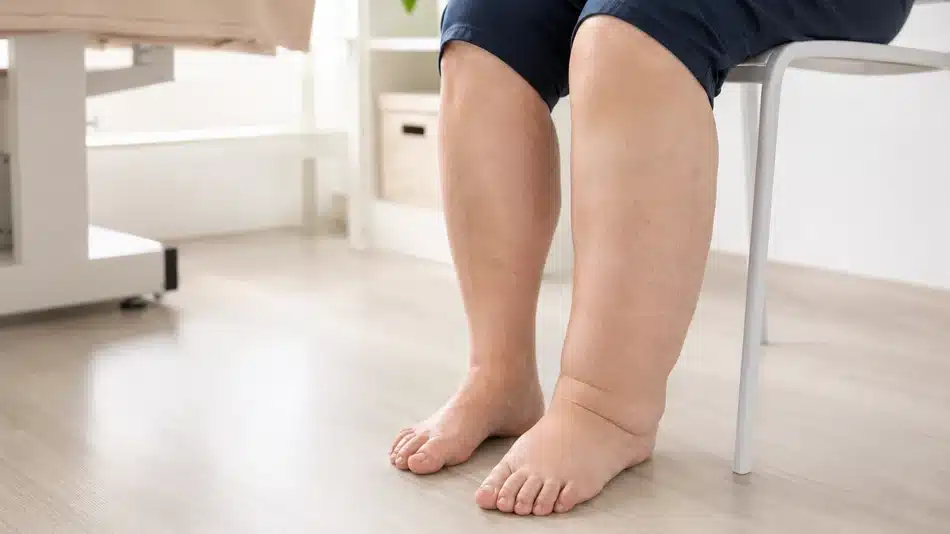
Lymphedema is a common cause of persistent swelling in a limb, especially in the arms or legs, although it can also appear in other areas of the body. It is often confused with “fluid retention”, poor circulation, varicose veins, lipedema or obesity, but it has nothing to do with these.
In our clinic, we often see people who have spent months or years noticing that one leg is more swollen, that an arm has increased in volume after surgery, that the skin feels tight, or that it is difficult to find comfortable clothes and shoes. In many cases this is not an urgent problem, but it should be assessed properly, because early diagnosis may help control its progression more effectively.
Lymphedema is a chronic problem. This means that it does not usually “go away forever”, but it can be treated and controlled. The aim is not to promise a cure, but to reduce volume where possible, improve the feeling of heaviness or tightness, protect the skin and prevent complications.
In this article, we explain what lymphedema is, why it occurs, how it differs from other circulatory problems, and when it is advisable to consult a vascular specialist.
Contents
- What the lymphatic system is and what happens in lymphedema
- Why lymphedema appears
- Common symptoms of lymphedema
- Lymphedema, varicose veins, lipedema and “fluid retention”: they are not the same
- How lymphedema is diagnosed
- Lymphedema treatment: controlling, improving and maintaining
- Can lymphedema be cured?
- When to consult a vascular surgeon
- What you can do at home while waiting for assessment
- FREQUENTLY ASKED QUESTIONS
What the lymphatic system is and what happens in lymphedema
To understand lymphedema, it is useful to begin with the lymphatic system.
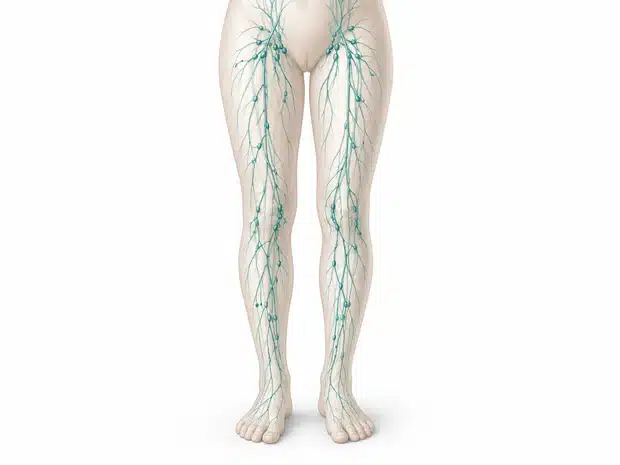
The lymphatic system is a network of very fine vessels and lymph nodes that runs through the body in parallel with the blood circulation. Its main function is to collect part of the water that remains between the cells in the tissues and return it to the circulation. It also plays a role in the body’s immune defenses.
When this system cannot drain properly, fluid builds up in the tissues. This fluid is usually rich in proteins and, over time, may cause persistent swelling, changes in skin texture and an increase in the volume of the affected area. This is what we call lymphedema.
Lymphedema most often affects the arms and legs, although it can also appear, much less frequently, in the chest wall, abdomen, neck or genitals. Its presentation varies greatly from one person to another: from mild swelling that appears at the end of the day to a sustained increase in volume that is more difficult to reduce.
Why lymphedema appears
Lymphedema appears when there is a problem transporting lymph. This problem may be due to the lymphatic system not developing properly, or to damage caused by an acquired condition.
In simple terms, we can speak of two broad groups.
Primary lymphedema
Primary lymphedema is related to abnormalities of the lymphatic system itself. It may appear in childhood, during adolescence or in adulthood. Sometimes there is a family predisposition, although not always.
In these cases, the lymphatic system has a lower drainage capacity from the outset, although symptoms may take years to become apparent.
Secondary lymphedema
Secondary lymphedema appears when a previously functioning lymphatic system is damaged or blocked. One well-known cause is cancer surgery with removal of lymph nodes, especially when it is associated with radiotherapy.
It may also be related to infections, trauma, surgery, tumors, significant obesity or other processes that make lymphatic drainage more difficult.
A common question is whether lymphedema can appear many years after cancer surgery. The answer is yes: although it most often appears during the first few years after surgery or subsequent treatments, it can also develop much later. This does not necessarily mean that the tumor has recurred, but it does require medical assessment to study the case.
Common symptoms of lymphedema
The main symptom of lymphedema is an increase in the volume of an area of the body. In the legs, it may be noticed as one leg being more swollen than the other, difficulty putting on shoes, deeper sock marks, or a feeling of tightness.
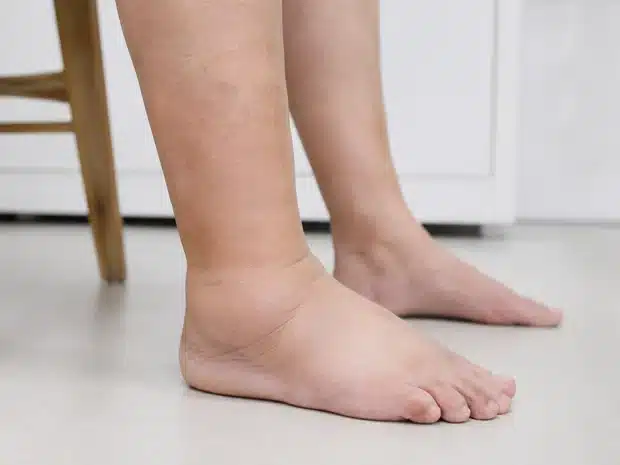
The symptoms and signs that may appear include:
- Persistent swelling of a leg, an arm or another area.
- A feeling of heaviness, pressure or tightness.
- Skin changes, with the skin becoming thicker and indurated over time.
- Reduced mobility if the volume increases significantly.
- A greater tendency to skin infections in some cases.
- Difficulty wearing usual garments, shoes, rings or watches.
In the early stages, swelling may partially improve when the limb is elevated or after a night’s rest. In more advanced stages, the swelling usually becomes harder and less reversible.
It is important not to assume that all leg swelling is due to lymphedema. There are many possible causes: venous insufficiency, varicose veins, venous thrombosis, heart, kidney or liver problems, medication side effects (for example, hormonal contraceptives), lipedema or obesity, among others.
Lymphedema, varicose veins, lipedema and “fluid retention”: they are not the same
One of the most important parts of medical assessment is distinguishing lymphedema from other problems that can also cause an increase in leg volume.
Lymphedema and venous insufficiency
Venous insufficiency and varicose veins occur when the veins do not return blood properly to the heart. This can cause heaviness, tiredness, ankle swelling, visible varicose veins, skin changes and even venous ulcers in advanced cases.
Lymphedema, on the other hand, is due to a problem with lymphatic drainage. Although both conditions may coexist, they are not the same and are not treated in exactly the same way.
When a person seeks medical advice for swollen legs, varicose veins or venous symptoms, a venous Doppler ultrasound is a very useful tool for studying venous circulation, ruling out or confirming venous insufficiency, and planning treatment when appropriate.
Lymphedema and lipedema
Lipedema is a chronic disorder of fatty tissue that mainly affects women and usually causes a symmetrical increase in leg volume, with pain or tenderness to touch and a tendency to bruise. It typically spares the feet, which helps distinguish it from lymphedema.
Lymphedema can affect both men and women, may be unilateral or bilateral, and often also affects the top of the foot. In advanced stages, the skin also tends to become thicker.
Even so, in practice it is not always easy to tell them apart. Some people may have lipedema with associated edema, associated lymphedema, or venous insufficiency at the same time. That is why it is important to avoid simplified diagnoses based only on photographs or general descriptions.
Lymphedema and obesity
Obesity may contribute to or worsen leg swelling and may also make lymphatic drainage more difficult. But not every increase in limb volume is lymphedema, and not every case of lymphedema is explained by weight.
The approach must be individualized, respectful and medical. The aim is not to blame the patient, but to identify which factors are influencing their case and which measures may help in their particular situation.
How lymphedema is diagnosed
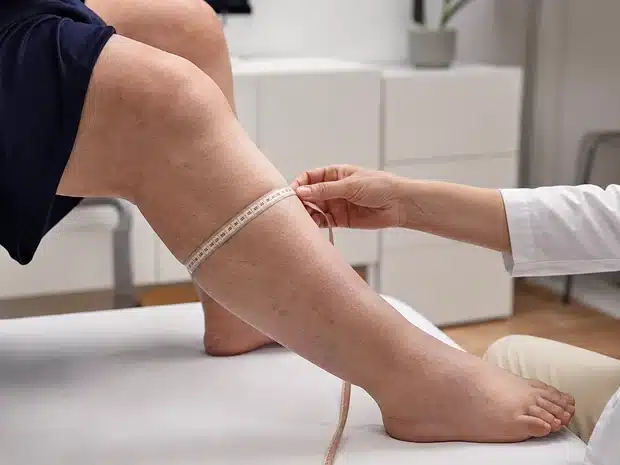
The diagnosis of lymphedema should begin with a detailed medical history and physical examination. The specialist will assess when the swelling began, whether it affects one or both limbs, whether it improves with rest, and whether there is a history of surgery, radiotherapy, infections, thrombosis, varicose veins or other medical problems.
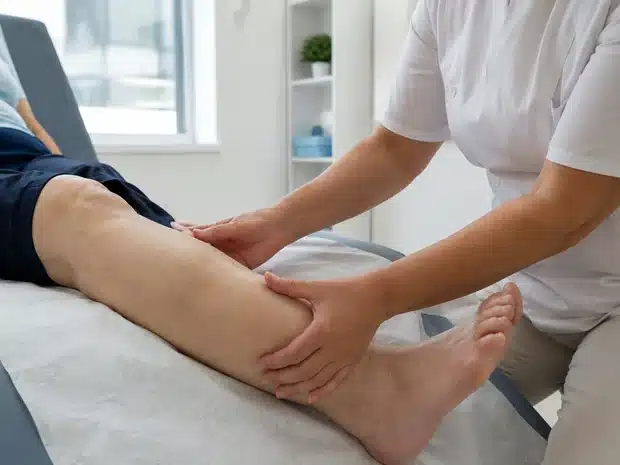
During the examination, the specialist looks at the distribution of the edema, the condition of the skin, the presence of venous changes, whether the foot or toes are affected, the consistency of the tissue and other clinical signs.
In some cases, the diagnosis may be clinical. In others, complementary tests may be needed to rule out other causes of edema or to study the lymphatic system in more detail.
Tests that may be considered, depending on the case, include:
- Venous Doppler ultrasound, to assess venous circulation and rule out venous insufficiency or thrombosis.
- Imaging tests such as magnetic resonance imaging or computed tomography in selected situations.
- Specific studies of the lymphatic system, such as lymphoscintigraphy or magnetic resonance lymphangiography, when there are diagnostic doubts or a more specialized assessment is being considered.
Not everyone needs all these tests. The choice depends on the symptoms, the examination and the clinical suspicion.
Lymphedema treatment: controlling, improving and maintaining
Lymphedema is a chronic problem, but that does not mean nothing can be done. On the contrary: appropriate treatment can improve symptoms, reduce volume in many cases, help keep the situation more stable and prevent secondary infections.
Treatment usually requires consistency and a combined approach. The most commonly used strategy is Complete Decongestive Therapy for lymphedema, which includes several measures.
Manual lymphatic drainage
Manual lymphatic drainage is a specific technique performed by professionals specifically trained in it. It is not a conventional massage. Its aim is to promote drainage of the accumulated fluid and help decongest the limb.
It may be part of a more intensive initial phase and, later, of a maintenance plan, depending on progression.
Compression with bandages or garments
Compression is one of the pillars of treatment. It may be applied with specific bandages, compression garments or adjustable systems, always adapted to the person.
Not all stockings are suitable for all types of edema. In lymphedema, fabrics, pressures and designs different from those used for varicose veins are required. This is why the garment should be prescribed and fitted individually.
A poorly chosen garment, one that is incorrectly fitted, or one with folds can be uncomfortable and even counterproductive. There are also situations in which compression must be indicated with particular caution, such as when there is significant arterial disease, certain skin lesions or associated medical problems.
Exercise and movement
Movement helps activate the muscle pump and may support drainage. Walking, doing prescribed exercises and maintaining adapted physical activity is usually beneficial.
Exercise should be adapted to each patient’s situation, especially if there is pain, limited mobility, excess weight, joint problems or a history of cancer.
Skin care
The skin in a limb with lymphedema may be more vulnerable. Keeping it clean, hydrated and protected helps reduce the risk of cracks, wounds and infections.
It is advisable to pay attention to small injuries, chafing, insect bites or signs of inflammation. If redness, heat, pain, fever or a rapid worsening of swelling appears, medical advice should be sought as a priority.

Pressotherapy and other resources
Intermittent pneumatic pressotherapy may be used in some cases as a complementary measure, always within a properly indicated plan. On its own, it does not replace medical assessment or a complete treatment strategy.
In selected situations, other options may be considered, but they must be individualized. The important thing is to avoid promises of rapid cure or isolated treatments that create unrealistic expectations.
Can lymphedema be cured?
This is one of the most frequent questions.
Lymphedema is usually considered a chronic problem and, therefore, in most cases we do not speak of a definitive cure. However, we do speak of treatment. And that difference matters.
With early diagnosis and an appropriate plan, some initial stages can improve significantly and even become barely visible. In more advanced cases, the aim is to reduce volume as much as possible, relieve symptoms, protect the skin, reduce complications and maintain results in the long term.
Patient adherence is essential. Treatment does not usually depend on a single session or a single technique, but on a set of measures maintained over time.
When to consult a vascular surgeon
It is advisable to request an assessment if you notice persistent swelling in a leg or an arm, especially if it is asymmetrical, if it affects the foot or toes, if it has appeared after surgery or radiotherapy, or if it is accompanied by skin changes.
It is also advisable to consult if you already have a diagnosis of varicose veins, thrombosis, lipedema or venous insufficiency and the swelling is increasing, because several factors may be involved.
You should seek medical attention urgently if the swelling appears suddenly, if it is accompanied by significant pain, redness, heat, fever, shortness of breath or general malaise. These symptoms should not automatically be attributed to lymphedema without assessment.
At Clínica Vascular Dr. Jorge Molina in Valencia, assessment of a swollen leg is aimed at distinguishing the possible causes: lymphatic, venous, mixed or other. In many patients, properly studying the origin of the edema is the first step in avoiding inappropriate treatments.
What you can do at home while waiting for assessment
Without replacing a medical consultation, some general measures may help:
- Avoid standing or sitting still for many hours.
- Walk regularly if your situation allows it.
- Elevate the limb during rest periods.
- Care for and moisturize the skin.
- Avoid wounds, chafing and footwear that compresses.
- Do not buy complex compression garments without an indication if you do not have a clear diagnosis.
- NEVER take diuretics on your own to treat a swollen leg.
These measures may be useful, but they do not replace diagnosis. Correct treatment depends on knowing what is causing the edema.
This information is general and does not replace a medical consultation. Each case of lymphedema must be assessed individually, especially if there is a history of cancer surgery, radiotherapy, varicose veins, thrombosis, infections, significant pain or skin changes.
FREQUENTLY ASKED QUESTIONS
Does lymphedema hurt?
It may cause a feeling of heaviness, tightness or discomfort. Severe pain is usually only associated with a situation of secondary infection and should prompt assessment for other associated causes.
Can it appear many years after cancer surgery?
Yes. Lymphedema can appear years after surgery or radiotherapy that has affected the lymph nodes, although it should be medically assessed.
Do compression stockings cure lymphedema?
They do not cure lymphedema definitively, but they are a fundamental part of treatment to contain edema and maintain results.
Is manual lymphatic drainage always useful?
It is extremely useful within a properly indicated Complete Decongestive Therapy plan for lymphedema, but it should not be understood as an isolated solution.
Can lymphedema and varicose veins coexist?
Yes. A person can have lymphedema and venous insufficiency at the same time, so a venous Doppler ultrasound may help with the differential diagnosis.
When should I worry about a swollen leg?
You should seek medical advice urgently if the swelling appears suddenly, there is severe pain, redness, heat, fever, shortness of breath or rapid worsening.

Should you be interested in getting to know this disease better, and its causes, consequences, how to treat them, and, even better, what can we do to prevent them, you can find it all well explained in the ebook VARICOSE VEINS: Truth & myths.