
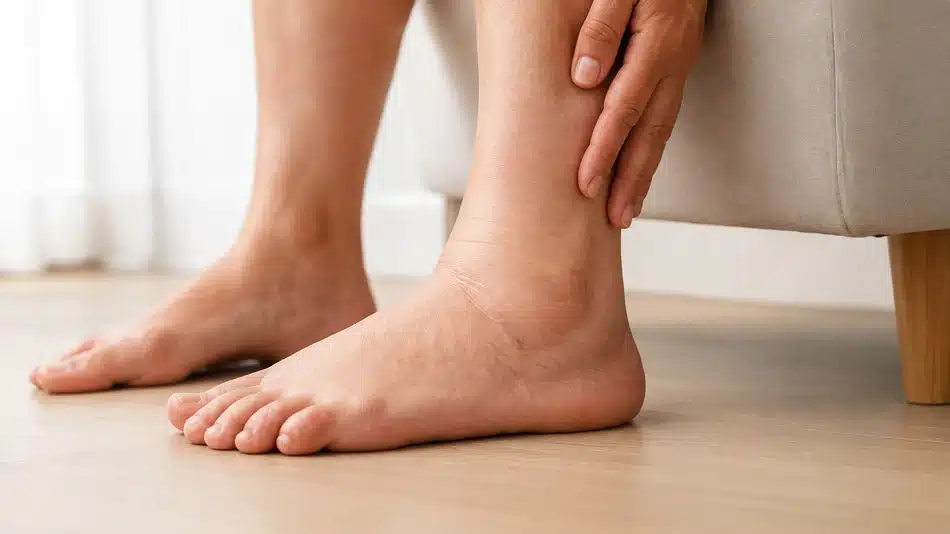
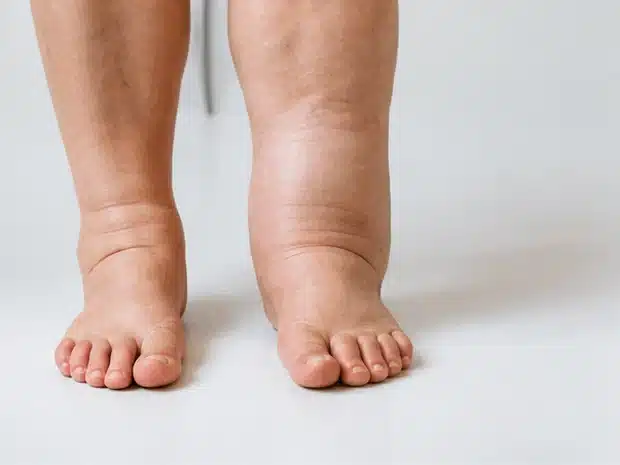
Lower-limb oedema is the medical term for swelling in the legs. It may appear around the ankles, feet, calves, or involve the whole limb. Sometimes it is mild and only noticeable at the end of the day; in other cases, it leaves a dent when pressed with a finger, makes it difficult to put on shoes, changes the appearance of the skin, or is accompanied by heaviness, pain, tiredness, or a feeling of tightness.
In our clinic, we often see patients who say: “my legs swell”, “my socks leave marks”, “my ankles look like balloons”, or “I’m fine in the morning, but by the afternoon I can’t cope anymore”. Although the cause is often related to venous or lymphatic circulation, not all oedema has the same origin, and it is not always treated in the same way.
That is why the most important point is this: oedema is not a disease in itself, but a sign. It tells us that something is encouraging fluid to build up in the tissues. It may be due to a venous problem, a lymphatic problem, the after-effects of a thrombosis, chronic venous insufficiency with varicose veins, immobility, heat, excess weight, or other medical causes that should be assessed individually.
Contents
- What exactly is leg oedema?
- Main causes of lower-limb oedema
- How to distinguish “functional” swelling from a problem that needs assessment
- Diagnosis: why venous Doppler ultrasound is key
- Consequences of not treating oedema correctly
- Initial management: measures that often help
- Compression: stockings, bandages, and adapted garments
- Treatment according to the cause
- When to consult a vascular surgeon
- FREQUENTLY ASKED QUESTIONS
What exactly is leg oedema?
Under normal conditions, blood reaches the legs through the arteries and returns to the heart through the veins.
In the legs, this mechanism is especially delicate because blood has to return upwards, against gravity. When we spend many hours standing or sitting, the veins have to work harder. To support venous return, the body relies on venous valves and on contraction of the calf muscles when walking, which act as a kind of natural pump.
When we walk, the muscles “milk” the deep veins and help push blood towards the heart. If we remain still for a long time, that muscle pump works less effectively. This is why many people notice more swelling after a long day standing, after hours sitting, during long journeys, or in hot weather.
The tissues also contain a lymphatic network, running alongside the venous system, which is responsible for collecting some of the excess fluid, proteins, and waste products that remain around the cells. This lymphatic system is precisely involved in collecting the “extra water” from the tissues and, when it becomes blocked or damaged, fluid may accumulate and swelling may appear, producing a condition called lymphoedema.
Main causes of lower-limb oedema
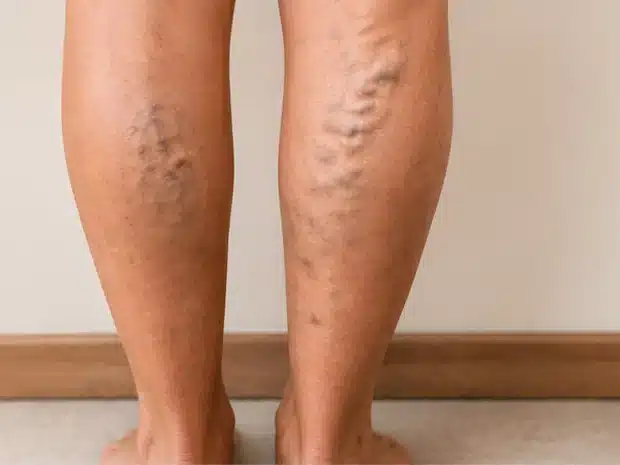
The most common cause we see in a vascular clinic is chronic venous insufficiency. In this situation, the veins are unable to return blood as efficiently as needed, especially when the person is standing or sitting. Blood tends to pool, pressure inside the veins rises, and some fluid may pass into the tissues. This can lead to oedema, heaviness, tiredness, cramps, pain, or the appearance of varicose veins.
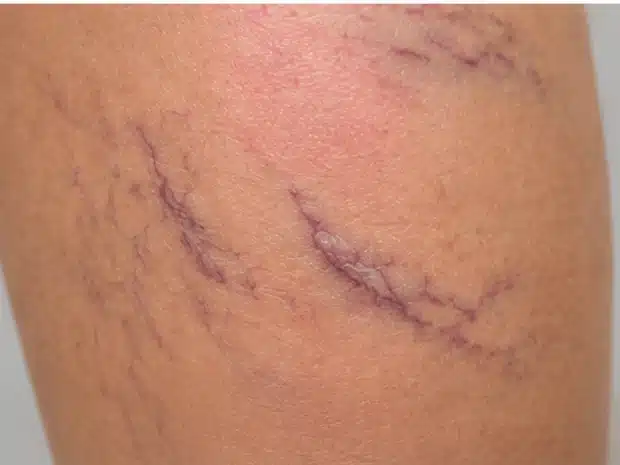
Varicose veins are not just an aesthetic issue. A varicose vein is a superficial vein that has become abnormally and permanently dilated and no longer performs its return function properly. When venous valves fail, blood may flow backwards or remain pooled, encouraging symptoms such as heaviness, pain, or swelling. In more advanced stages, chronic venous disease may be associated with skin changes, eczema, pigmentation, hardening around the ankle, or even venous ulcers.
Another important cause is lymphoedema. In this case, the main problem is not in the veins, but in the lymphatic system. Lymphoedema occurs due to an accumulation of protein-rich fluid that would normally be drained through the lymphatic vessels. It may affect one leg or both, and in some cases it appears after cancer surgery, radiotherapy, lymph node removal, infections, trauma, or due to disorders of the lymphatic system itself. Lymphoedema can affect mobility, increase the risk of skin infections, and produce skin changes when it is significant.
There is also oedema related to a previous deep vein thrombosis. After a thrombosis, some veins may remain damaged or have difficulty draining properly. This can lead to what is known as post-thrombotic or post-phlebitic syndrome, with chronic swelling, heaviness, skin changes, and a risk of venous ulcers in advanced cases.
There are also situations that can worsen oedema of venous or lymphatic origin: excess weight, a sedentary lifestyle, prolonged work standing or sitting, heat, very tight clothing around the thighs or pelvis, footwear that limits ankle mobility (such as high heels), and lack of regular physical activity.
There may also be general non-vascular causes —cardiac, renal, liver-related, hormonal, medication-related, or others— which should be assessed by the appropriate doctor.
How to distinguish “functional” swelling from a problem that needs assessment
Swollen legs do not always mean there is a serious disease, but it is also not advisable to normalise it if it happens repeatedly. Some patterns can guide us.
When oedema appears at the end of the day, improves when lying down, worsens with heat, and is accompanied by heaviness or visible varicose veins, it may have a venous component. When the swelling is persistent, affects the top of the foot, does not clearly improve with rest, or is accompanied by a progressive increase in leg volume, a lymphatic component may be suspected. When it appears suddenly in one leg, especially if there is pain, increased temperature, redness, or a marked feeling of tightness, it should be assessed urgently to rule out a thrombosis or other acute processes.
It is also advisable to seek medical advice if the skin changes colour, eczema appears, there is itching, hardening around the ankle, wounds that take time to heal, or ulcers. These signs may indicate advanced chronic venous disease and require specialist assessment.
Diagnosis: why venous Doppler ultrasound is key
Diagnosis begins by listening to the patient: when the legs started swelling, whether one or both legs are affected, whether it improves in the morning, whether it worsens with heat, whether there are varicose veins, and whether there is a history of thrombosis, surgery, cancer, radiotherapy, long journeys, pregnancy, medication, or general illnesses.
A physical examination is then carried out. The specialist observes the distribution of the oedema, the skin, the presence of varicose veins, spider veins, colour changes, wounds, signs of lymphoedema, or findings that may suggest another cause.
In the vascular approach, a fundamental test is the venous Doppler ultrasound. This examination makes it possible to study the veins, assess whether venous reflux is present, check valve function, and analyse the superficial and deep venous systems. International phlebology clinical guidelines recommend venous Doppler ultrasound as the diagnostic test of choice for assessing venous reflux in chronic venous disease of the lower limbs.
At Clínica Vascular Dr. Jorge Molina, venous Doppler ultrasound is not understood as an isolated test, but as a tool to guide diagnosis and plan management. Not all swollen legs need the same treatment, and not all varicose veins have the same functional importance. That is why it is so relevant to know which veins are affected, whether superficial venous insufficiency is present, whether there are after-effects of thrombosis, or whether the oedema has another explanation.
Consequences of not treating oedema correctly
The first consequence is usually loss of quality of life. The legs feel heavy, tired, painful, uncomfortable when walking or at the end of the day, and they interfere with daily activity. Some people stop exercising, reduce their walks, or avoid certain plans because their legs feel “loaded”.
The second consequence affects the skin. Persistent swelling may favour dryness, itching, eczema, colour changes, and skin fragility, especially around the ankle. In advanced chronic venous insufficiency, hardening of the skin and subcutaneous tissue, chronic inflammation, and venous ulcers may appear.
The third consequence is progression of the underlying problem. If oedema is due to venous insufficiency with varicose veins, conservative management may control symptoms and help slow progression, but it does not remove the diseased veins. Conservative treatments, especially compression stockings, may be effective in controlling symptoms and reducing complications, although they do not make varicose veins disappear.
In lymphoedema, delaying treatment may make it easier for the volume to increase, for the skin to harden, and for the problem to become more difficult to control. Lymphoedema is a chronic condition that still has no definitive cure today, but it does have treatment, and patient adherence is important for maintaining results over time.
Initial management: measures that often help
Treatment for oedema depends on the cause. Even so, there are general measures that are often useful when there is a venous component or immobility.
Walking every day is one of the simplest and most effective measures. The calf muscles act as a pump that helps push blood upwards. That is why, rather than standing still, it is usually better to walk, move the ankles, or take active breaks.
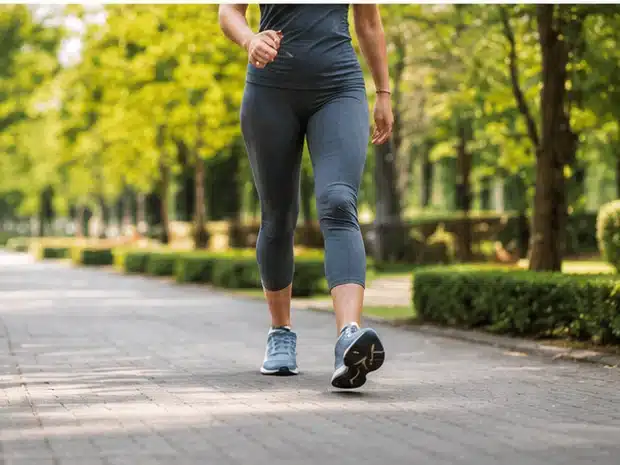
It also helps to avoid long periods of sitting without moving. In office work or during long journeys, it is advisable to get up from time to time, walk for a few minutes, and move the ankles. If getting up is not possible, flexing and extending the feet may partially activate the muscle pump.
Raising the legs for a while at the end of the day may relieve the feeling of heaviness. It is not always necessary to sleep with the legs elevated; in many cases, resting horizontally is enough to support venous return.
Heat often worsens venous symptoms because it encourages vasodilation. This is why many people feel worse in summer, with prolonged direct sun exposure, or even in winter with saunas, very hot baths, or heaters. Cool water or creams with a cooling effect may provide relief, without replacing the indicated treatment.
Maintaining an appropriate weight may also help. Excess weight, especially around the abdomen, can make it harder for venous blood to return from the legs to the heart. Regular physical activity also improves mobility, muscle strength, and the function of the calf pump.
Compression: stockings, bandages, and adapted garments
Compression is one of the most important tools in the management of venous oedema, lymphoedema, and other forms of lower-limb oedema. But not all stockings are the same. There are different sizes, lengths, compression grades, and types of fabric. Choosing “any stocking” can be as imprecise as asking for “a tablet” without knowing what problem is being treated.
An elastic stocking works by applying more compression at the ankle and less as it goes up the leg. This pressure gradient supports venous return. When combined with muscle contraction while walking, its effect is even greater. Compression stockings may improve symptoms such as pain, heaviness, tiredness, and oedema, and they may be used in venous insufficiency, varicose veins, post-phlebitic syndrome, lymphoedema, lipoedema, and other forms of oedema, adapting the type of garment to each situation.
When they are indicated, the correct way to use them is usually to put them on in the morning (as soon as you get out of bed, before swelling appears), wear them during the day, and remove them at night. It is also useful to care for the skin, especially around the ankle, with adequate moisturising, because this area can suffer considerably in venous insufficiency.
Treatment according to the cause
If oedema is due to venous insufficiency with varicose veins, treatment may be conservative or interventional. Conservative treatment includes lifestyle measures, compression, and control of factors that worsen symptoms. If there is significant venous reflux and symptoms, treatment for varicose veins may be considered using techniques such as Radiofrequency, VenaSeal®, or other options indicated according to each patient’s venous map. The choice should be made after examination and venous Doppler ultrasound, avoiding promises of identical results for everyone.
If the oedema is due to lymphoedema, the approach is different. Decongestive lymphoedema therapy may include manual lymphatic drainage, compression with bandages or stockings (a type of stocking with a completely different construction from stockings for varicose veins), skin care, exercise, and, in some cases, pressotherapy.
If thrombosis is suspected, management changes completely and must be urgent. Treatment should not be started on one’s own, and assessment should not be delayed if swelling appears suddenly, especially in one leg and with pain or increased temperature. If these symptoms appear, the appropriate step is to go immediately to an Emergency Department.
When to consult a vascular surgeon
It is advisable to request an assessment if:
- the swelling keeps recurring
- if it worsens over the months
- if there are varicose veins
- if there is heaviness, pain, or skin changes
- if there is a history of thrombosis, wounds, or skin ulcers
- if one leg is clearly more swollen than the other (if this has happened more or less suddenly, go immediately to the Emergency Department).
It is also advisable to consult before buying compression stockings, especially if there are associated conditions such as diabetes, arterial problems, neuropathy, or skin wounds.
At Clínica Vascular Dr. Jorge Molina, in Valencia, lower-limb oedema is assessed from a vascular and personalised perspective. The aim is not only to “reduce the swelling”, but to understand why it appears, which system is involved, and which management options are most reasonable in each case.
FREQUENTLY ASKED QUESTIONS
Does leg swelling always mean varicose veins?
NO. Varicose veins are a common cause, but not the only one. Oedema may also appear as a consequence of lymphoedema, the after-effects of thrombosis, lipoedema, immobility, heat, or other general medical causes (cardiac, liver-related, renal, hormonal, and others).
Do compression stockings eliminate oedema?
They may help a great deal when they are properly indicated and correctly fitted, especially in venous oedema. In many cases they control symptoms, but they do not eliminate the underlying cause if there are varicose veins or significant venous insufficiency.
Is it normal for legs to swell in summer?
It is common for heat to worsen venous symptoms because it encourages the veins to dilate. Even so, if the swelling is significant, persistent, or asymmetrical, it should be assessed.
When can a swollen leg be urgent?
When it appears suddenly, mainly affects one leg, and is accompanied by pain, redness, local heat, or difficulty walking. In these cases, thrombosis or other acute problems must be ruled out.
Does venous Doppler ultrasound hurt?
NO. It is a non-invasive test, with no needles, which makes it possible to study how the veins work and guide the vascular diagnosis.
Can lymphoedema be treated?
YES. Although it is usually a chronic problem, it can be treated. The approach may include decongestive therapy, compression, lymphatic drainage, exercise, and skin care, always adapted to the individual case.
Should you be interested in getting to know this disease better, and its causes, consequences, how to treat them, and, even better, what can we do to prevent them, you can find it all well explained in the ebook VARICOSE VEINS: Truth & myths.