
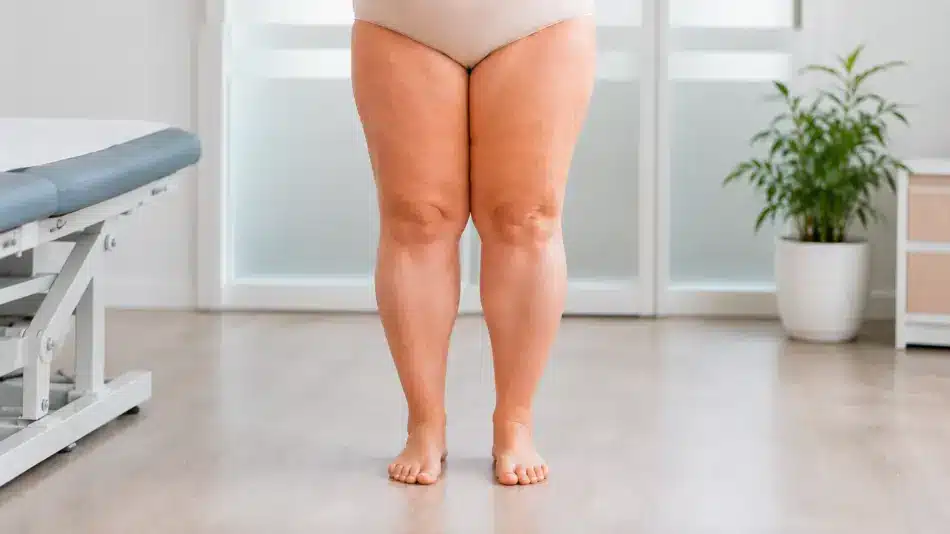
In our clinic, we often see women who have spent years hearing incomplete explanations about their legs: “it is fluid retention”, “it is being overweight”, “it is genetic”, “go on a stricter diet”, “do more exercise”. Sometimes one of these ideas may contain part of the truth, but it does not always explain what is really happening.
Lipedema is a chronic disease of adipose tissue and loose connective tissue that mainly affects women. It usually appears as a disproportionate, bilateral and fairly symmetrical increase in leg volume, often with pain, tenderness, a feeling of heaviness and a tendency to bruise easily.
It is not simply a matter of “having large legs”. Nor should it be confused with localized obesity or labelled too quickly when fat is mainly distributed in the lower body. To diagnose lipedema, several compatible clinical findings are needed, and other possible causes of limb enlargement must first be ruled out.
The aim of this article is to help you understand what lipedema is, which symptoms may suggest the diagnosis, which tests may be useful to rule out other problems, and what management options are currently available.
Contents
What lipedema is
Lipedema is characterized by an abnormal and disproportionate accumulation of subcutaneous adipose tissue, mainly in the lower limbs. In many patients it affects the thighs, knees, legs and ankles, with a relatively symmetrical pattern. Less commonly, the arms may also be affected.
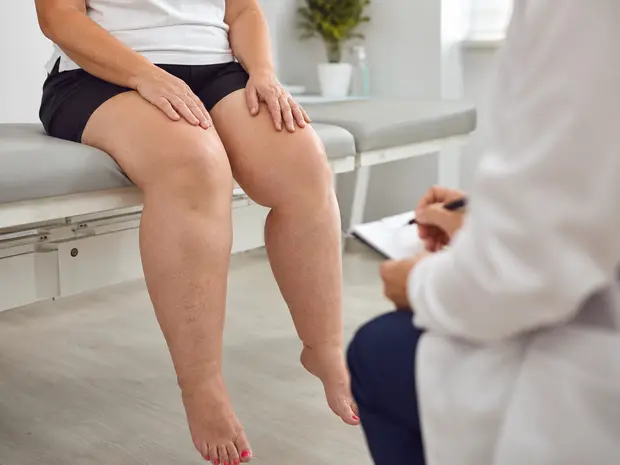
A typical feature is that the feet are usually spared. In other words, there may be a clear increase in leg volume, but the foot does not show the same pattern of fat enlargement. This helps guide the diagnosis, although it should not be interpreted in isolation.
The disease predominantly affects women. Many patients report that their symptoms began or worsened around hormonal changes, such as puberty, pregnancy or menopause. This does not mean that the hormonal mechanism is fully understood, but it does fit with what is often seen in clinical practice and in recent medical literature.
Lipedema is not only an aesthetic condition. It can have a physical, functional and emotional impact. Pain, tenderness to touch, difficulty finding suitable clothing or stockings, limitations when exercising, and lack of understanding from others can significantly affect quality of life.
Common symptoms of lipedema
Symptoms are not identical in all patients. Their intensity can also vary greatly. Even so, there are several manifestations that appear frequently:
- Disproportionate increase in leg volume. The patient may notice that her legs are out of proportion with her trunk or upper body.
- Fairly symmetrical distribution. It usually affects both legs in a similar way, although small differences may exist.
- Feeling of heaviness. Some patients describe heavy, tired legs or a sensation of pressure, especially at the end of the day.
- Easy bruising. Bruises may appear after minimal knocks or even without the patient remembering any clear trauma.
- Relative sparing of the feet. In typical forms, the increase in volume stops around the ankle and the foot does not show the same pattern.
- Irregular tissue texture. In some patients, nodules, firmer areas or irregularities can be felt in the subcutaneous tissue.
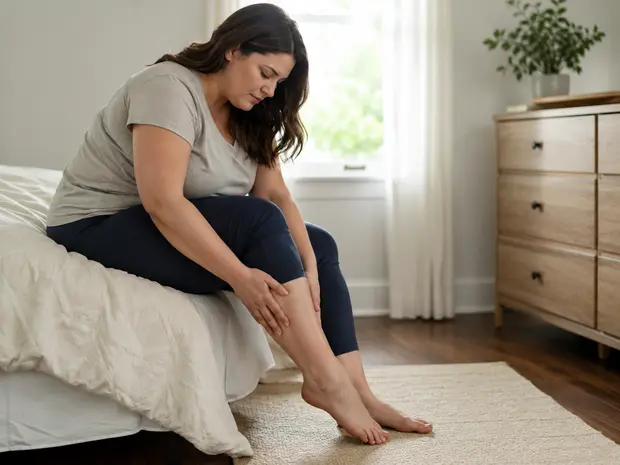
- Pain or tenderness in the affected areas. Up to one third of patients describe pain when pressure is applied to the skin (even with light pressure), discomfort after standing for a long time, or a feeling of internal tightness.
Lipedema is not the same as lymphedema
It is important to distinguish lipedema clearly from lymphedema, because they are completely different conditions. They can be confused in practice, and this confusion can lead to delayed diagnosis or poorly directed treatment.
Lipedema is mainly a disorder of adipose tissue and loose connective tissue, with a disproportionate and sometimes painful pattern. Lymphedema, on the other hand, involves a problem in the lymphatic system with accumulation of lymphatic fluid, and has a different diagnostic and therapeutic approach.
This distinction should not be made by the patient alone by looking at photographs online. It should be based on medical history, physical examination and an appropriate medical assessment. Although the names sound very similar, and some symptoms may also be similar (an increase in limb volume in both cases), these are two very different conditions that should be diagnosed correctly because their management and long-term implications are very different.
Why lipedema occurs
There is still no single, definitive explanation. Current understanding points to a multifactorial origin.
Genetic and hormonal factors, changes in adipose tissue, alterations in the extracellular matrix, inflammation, fibrosis, microvascular dysfunction and pain mechanisms that are not yet fully understood have all been proposed. In some families there appear to be several cases, suggesting a hereditary predisposition in certain patients.

It is also common for lipedema to coexist with obesity, but they are not the same. This difference is important. A patient with lipedema may have obesity, and treating obesity when present may be beneficial for general health, mobility and metabolic risk. But this does not necessarily mean that lipedema will disappear with diet, weight loss or bariatric surgery.
That is why many patients describe a very characteristic experience: they lose volume from the trunk, face or abdomen, but their legs change less than expected and may remain painful.
How lipedema is diagnosed
The diagnosis of lipedema remains clinical. This means that it is based on medical history, symptoms, physical examination and exclusion of other diagnoses.
At present there is no blood test, genetic marker or imaging test that can confirm the diagnosis on its own. Complementary tests may be useful, but they do not replace expert clinical assessment.
During the consultation, the specialist usually assesses:
- When the symptoms began.
- Whether there was any relationship with puberty, pregnancy, menopause or other hormonal changes.
- Whether there is pain, tenderness or heaviness.
- Whether bruises appear easily.
- How the volume is distributed in the legs and, where relevant, in the arms.
- Whether the feet are spared.
- Whether there are varicose veins, swelling, skin changes or other signs of vascular disease.
- How the problem affects mobility and quality of life.
- Whether there is another disease or alternative condition that could explain the increase in limb volume.
In a vascular clinic, it is also important to assess whether there is associated venous disease, because symptoms such as heaviness, tiredness, swelling or leg pain may also appear in chronic venous disease.
When there are venous symptoms, visible varicose veins, significant spider veins or diagnostic uncertainty, a venous Doppler ultrasound may help study the venous system, detect reflux, assess varicose veins and rule out other circulatory problems. It does not confirm lipedema on its own, but it can be very useful to avoid attributing all symptoms to lipedema when venous disease is also present.
Lipedema and varicose veins: a possible combination
A patient may have lipedema and, at the same time, varicose veins or venous insufficiency. This matters because both situations can add to the symptoms.
Lipedema can cause pain on pressure, tenderness, heaviness and disproportionate leg volume. Venous disease, in turn, can cause pain, heaviness, tiredness, swelling at the end of the day, visible varicose veins, skin changes or discomfort that worsens with heat and prolonged standing.
When both problems are present, diagnosis becomes more complex. That is why simple answers should be avoided. Not all leg pain in a patient with lipedema is due to lipedema. And not every leg with varicose veins fully explains a disproportionate increase in adipose tissue.
Assessment by a vascular surgeon makes it possible to study the venous component and guide management more precisely.
Treatment for lipedema: what can be done
Treatment for lipedema should be individualized. There is no single solution that is valid for every patient and, above all, a definitive cure cannot be promised.
The realistic goal of treatment is to relieve symptoms, improve function, protect mobility, reduce the impact on quality of life and prevent associated problems from accumulating.
Education and a clear diagnosis
Putting a name to what is happening can be important. Many patients arrive after years of frustration, repeated diets and comments that make them feel blamed. Understanding that lipedema is not simply a “lack of willpower” helps focus management more appropriately.
But the diagnosis must also be made carefully. Greater awareness of lipedema should not lead to overdiagnosis. Not all adiposity predominantly affecting the legs is lipedema.
Adapted exercise
Exercise does not “cure” lipedema, but it may help improve mobility, strength, function and general wellbeing. In our clinic, we usually recommend realistic, progressive and sustainable physical activity.
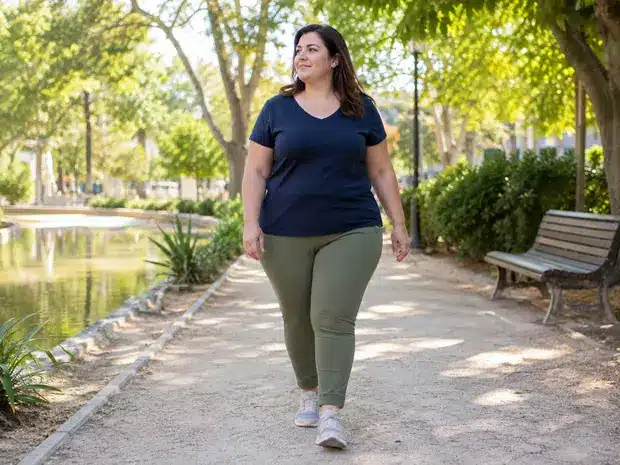
Walking, adapted strength exercises, gentle cycling, swimming, activity in water or yoga may be useful options depending on the case. The key is to avoid extreme messages. The patient does not need to punish herself with painful exercise or give up because she cannot change the shape of her legs.

The aim is to move better, gain strength, protect the joints and improve general health.
Weight control when obesity is also present
Lipedema is not obesity, but obesity can coexist with it and worsen pain, mobility, inflammation, joint load and metabolic risk. If obesity is present, addressing it in a medical, respectful and non-blaming way can be an important part of treatment.
Weight loss may improve general health and reduce part of the body volume, but areas affected by lipedema may respond less than other areas. This is why realistic expectations are important.
Individualized compression
Compression may help some patients reduce discomfort, heaviness or associated symptoms. Not all patients need the same type of garment or the same level of compression.

The choice should be individualized. A stocking that is poorly indicated, uncomfortable or difficult to put on may lead the patient to stop using it. In lipedema, fabrics and designs different from those used in classic venous insufficiency are sometimes required.
Physiotherapy and self-care
Some patients may benefit from specialized physiotherapy, mobility work, therapeutic exercise and self-care guidance. Certain decongestive techniques may be useful in selected patients, especially when associated symptoms justify them, but they should not be applied automatically to every case of lipedema as if the problem were always the same.
Psychological support when needed
Lipedema can cause emotional distress. Not because it is “all in the mind”, but because living with chronic pain, body changes, functional limitations and stigma can affect mood, self-esteem and the relationship with one’s own body.
Psychological support can be useful when there is anxiety, low mood, isolation, eating disorders, chronic pain or a very damaged relationship with the body.
Lipedema reduction surgery
In selected cases, reduction surgery using specific liposuction techniques that are respectful of the tissues may improve symptoms such as pain, heaviness, mobility, tendency to bruise and quality of life. And, of course, it can reduce limb volume by removing this abnormal fatty tissue.
The available evidence shows favourable signs, but it comes largely from observational studies and clinical series. It should therefore be explained with caution. It should not be presented as a guaranteed cure or as the same solution for every patient.
The indication for surgery requires assessment of symptoms, degree of functional impairment, expectations, general health, weight, comorbidities, risks and the team’s experience. It should also be integrated into a complete management plan, not treated as an isolated decision.
When to consult a vascular surgeon
It makes sense to seek medical advice if you notice a disproportionate and symmetrical increase in leg volume, pain or tissue tenderness, persistent heaviness, frequent bruising, progressive worsening, difficulty walking, or doubts about whether venous disease may also be present.
It is also advisable to consult if you have varicose veins, extensive spider veins, swelling that worsens at the end of the day, skin changes or a history of thrombosis.
At Clínica Vascular Dr. Jorge Molina, in Valencia, vascular assessment makes it possible to study leg symptoms from a broad medical perspective. In many cases, a venous Doppler ultrasound helps rule out or confirm associated venous disease and separate which part of the symptoms may be related to the veins and which part may fit with lipedema.
Conclusion
Lipedema is a real, complex disease that is still not fully understood. It should not be reduced to an aesthetic problem or automatically confused with obesity. Nor should it be overdiagnosed in every case of increased leg volume.
The key is careful clinical assessment, a complete examination and an individualized approach. In many cases, it is also important to study venous circulation, because varicose veins and venous insufficiency can coexist and modify the symptoms.
If you think you may have lipedema or you have doubts about pain, heaviness, disproportionate leg volume or associated varicose veins, request a medical assessment.
Notice: this information is general and does not replace a medical consultation. Each case must be assessed individually by a healthcare professional.
FREQUENTLY ASKED QUESTIONS
Can lipedema be cured by losing weight?
Not necessarily. If associated obesity is present, weight loss may improve general health, mobility and some symptoms. However, tissue affected by lipedema may respond less than other areas of the body. That is why many patients lose weight in the trunk or abdomen while maintaining disproportion in the legs.
Is lipedema always painful?
Pain or tenderness are very characteristic elements for diagnosis, but they appear in only approximately 30% of patients with lipedema.
Is there a test that confirms lipedema?
There is currently no single test that can confirm it on its own. The diagnosis is clinical. Imaging tests can help rule out other problems or assess associated diseases, but they do not replace medical examination.
Does venous Doppler ultrasound diagnose lipedema?
No. Venous Doppler ultrasound does not diagnose lipedema, but it can be very useful for studying whether there are varicose veins or venous reflux and for excluding other circulatory problems that may explain or worsen leg symptoms.
Is compression mandatory in all cases?
Not necessarily. It may be useful in many patients, but it should be individualized according to symptoms, tolerance, tissue type, daily activity and the presence of associated problems.
Is surgery always necessary?
No. Surgery may be considered in selected cases, especially when there is persistent pain and functional limitation despite appropriate conservative management. This treatment is usually carried out by plastic surgeons. The decision should be individualized and cautious.

Should you be interested in getting to know this disease better, and its causes, consequences, how to treat them, and, even better, what can we do to prevent them, you can find it all well explained in the ebook VARICOSE VEINS: Truth & myths.