
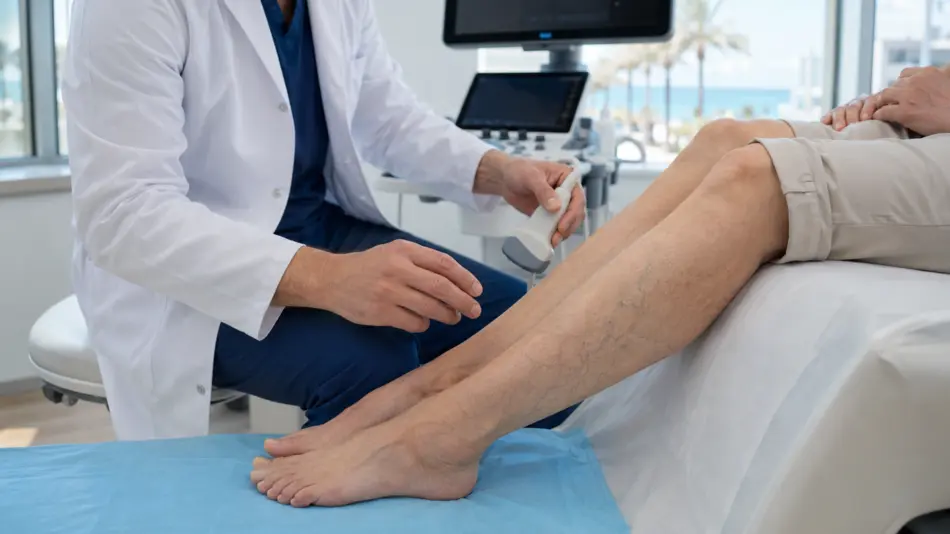
In summer, it is common to pay more attention to the legs. Lighter clothing, heat, the beach or the swimming pool make many people notice veins that previously went more unnoticed: bulging varicose veins, bluish veins, spider veins, or areas of the leg that seem more heavy by the end of the day.
We often see this situation in our clinic: someone asks for an assessment because “their varicose veins are more visible” or because the appearance of their legs bothers them more in summer. Sometimes there is also heaviness, tiredness, swelling, itching or cramps. In other cases, the concern is mainly aesthetic. Both reasons are legitimate.
But there is an important idea: before deciding on varicose vein treatment, it is advisable to study venous circulation. Looking only at the vein that can be seen externally is not enough. Visible varicose veins are only part of the story. To understand what is really happening, which veins are involved and which treatment may make sense in each case, the first step is usually a vascular assessment with clinical examination and venous Doppler ultrasound.
Contents
- Why varicose veins become more noticeable in summer
- Visible varicose veins do not tell the whole story
- What symptoms may accompany varicose veins
- The role of venous Doppler ultrasound
- Why it is advisable to study the veins before treating them
- Varicose veins and spider veins are not exactly the same
- What can happen if only what is visible is treated
- Useful measures while waiting for assessment
- Is summer a good time to study varicose veins?
- When to consult a vascular surgeon
- Request an assessment
- Medical notice
- FREQUENTLY ASKED QUESTIONS
Why varicose veins become more noticeable in summer
Summer does not create varicose veins overnight, but it can make them more noticeable. Heat promotes vein dilation. When veins dilate, venous return may become slower and some symptoms may intensify, especially in people with pre-existing venous insufficiency.
That is why many people say their legs feel worse during the hot months. They notice more heaviness, more tiredness, more swelling, or a greater need to elevate their legs when they get home. Itching, tightness or cramps may also increase, especially at the end of the day.
Other typical summer factors may also contribute: more time standing, long journeys, changes in routine, less use of compression stockings because they feel hot, saltier meals, greater sun exposure, or working days that make it harder to maintain healthy habits.
Not all leg symptoms are due to varicose veins, but when visible varicose veins coincide with symptoms that worsen with heat or by the end of the day, it is advisable to assess whether there is a venous return problem. In a previous article, we also explained when heaviness, swelling or cramps in the heat may have a venous origin.
Visible varicose veins do not tell the whole story
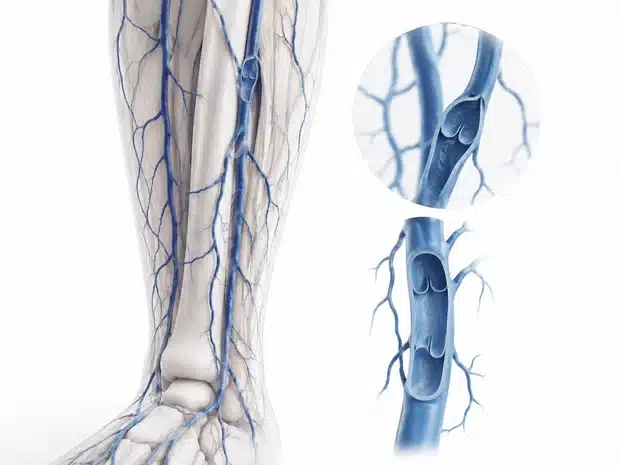
A varicose vein is an abnormally and permanently dilated superficial vein. The veins in the legs carry blood back to the heart. To do this, they have valves that help blood move upward and prevent it from flowing backward under the effect of gravity.
When these valves do not work properly, venous reflux may appear. This means that part of the blood tends to flow in the wrong direction and accumulates in the superficial veins. Over time, these veins may dilate and become visible as varicose veins.
The problem is that what can be seen on the skin does not always show where the problem begins. A varicose vein in the calf may be related to a main superficial vein, a venous branch, a perforator vein, or a specific reflux pattern. In other cases, spider veins may appear without significant venous insufficiency, although they may also coexist with larger varicose veins.
That is why it is not wise to decide on treatment based only on external appearance. Two people may have varicose veins that look similar at first glance and yet need different approaches. One may benefit from conservative measures, another may need treatment of an insufficient saphenous vein, and another may have spider veins suitable for sclerotherapy, always after assessing the case as a whole.
What symptoms may accompany varicose veins
Varicose veins do not always hurt. Some people have visible varicose veins and barely notice any discomfort. Others, however, have significant symptoms even when the veins are not very noticeable. That is why assessment should not focus only on the aesthetic appearance of the leg.
The most common symptoms of venous disease include heaviness, tiredness, dull pain, a feeling of heavy legs, swelling in the ankles or calves, itching, night cramps, or worsening after spending many hours standing or sitting. Symptoms also typically increase at the end of the day and improve with walking, leg elevation, or overnight rest.
In more advanced stages, skin changes may appear, especially around the ankle: darker discoloration, eczema, hardening of the skin, or slow-healing wounds. These signs require medical assessment because they may indicate more advanced venous insufficiency.
There are also situations that deserve special attention: a varicose vein that becomes inflamed, hard and painful, bleeding from a varicose vein, sudden swelling of one leg, or unusual intense pain. In these cases, an urgent assessment is required.
The role of venous Doppler ultrasound
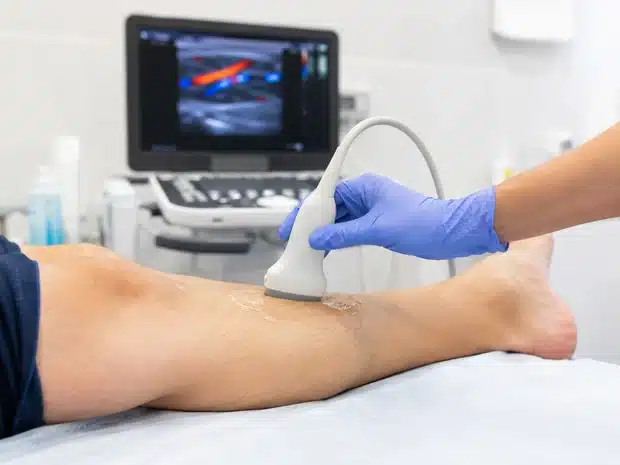
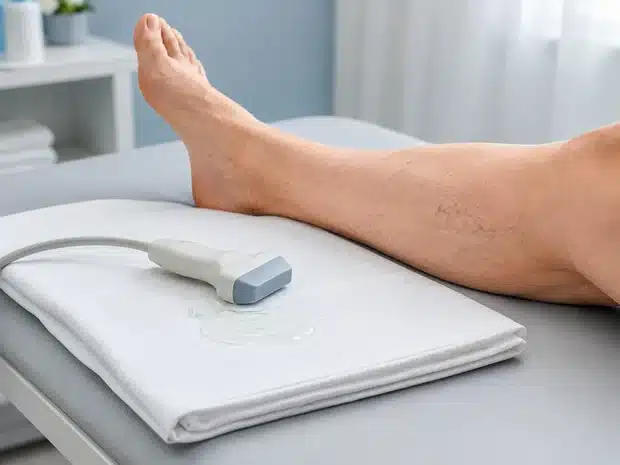
Venous Doppler ultrasound is a fundamental test in the study of varicose veins. It is a specific ultrasound scan that allows us to observe the veins and study how blood flows through them.
It is not just a matter of “seeing veins”. Doppler allows us to assess whether venous flow is moving in the right direction, whether reflux is present, which segments are affected, and whether the deep veins are patent. It can also help rule out thrombosis or the consequences of previous episodes when the medical history or examination makes this necessary.
In the study of varicose veins, venous Doppler ultrasound is usually performed with the patient standing or in a position that allows better assessment of how the veins behave under the effect of gravity. It does not require needles, needs no special preparation, and fasting is not necessary.
This information changes the way treatment is planned. Without Doppler ultrasound, there is a risk of treating only what is visible and failing to assess the origin of the problem. With Doppler ultrasound, the vascular surgeon can explain which veins are not working properly, what options are available, and what realistic goal each one has.
Why it is advisable to study the veins before treating them
In vascular medicine, the order matters. First we study, then we decide. This is especially important in varicose veins, because there are different types of treatment and not all of them are suitable for every case.
In some patients, conservative measures may be sufficient for a time: changes in habits, exercise, avoiding prolonged sedentary periods, postural measures, or correctly indicated compression stockings. These measures may relieve symptoms and help control venous insufficiency, although they do not remove varicose veins that have already formed.
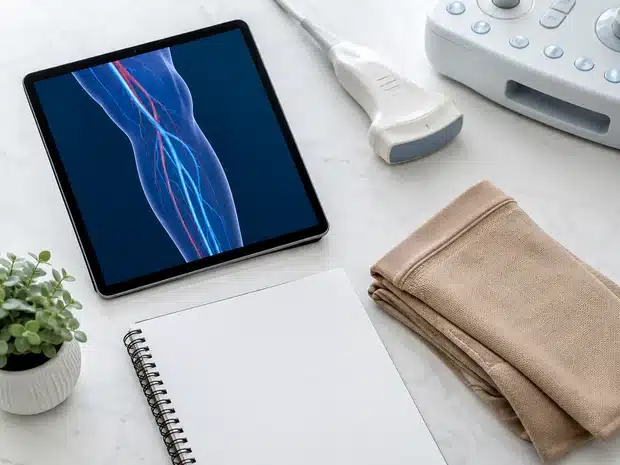
In other cases, specific treatment of insufficient veins may be considered. Depending on venous anatomy, symptoms, the type of reflux and each person’s characteristics, techniques such as radiofrequency, VenaSeal®, sclerotherapy or other procedures may be assessed. The choice should not be based on trends, speed or an aesthetic promise, but on medical indication.
It is also important to know what to expect from each treatment. Treating an insufficient main vein is one thing, treating varicose branches is another, and improving spider veins is another. Sometimes strategies are combined in different stages. In other cases, it is advisable to prioritize functional treatment over aesthetic treatment. And in some cases, the recommendation may be to observe, control symptoms and review progress.
Varicose veins and spider veins are not exactly the same
Many people call any visible vein in the leg “varicose veins”, but they are not all the same. Varicose veins are usually dilated superficial veins, often bulging or tortuous. Spider veins, on the other hand, are very fine reddish or bluish vessels that look like small branches on the skin. Reticular veins may also be present; these are somewhat larger than spider veins and bluish or greenish in color.
This difference matters because treatment may change. Spider veins are often treated with techniques such as sclerotherapy when indicated, but first it is advisable to assess whether associated venous insufficiency is present. If there is an untreated underlying venous problem, focusing only on the spider veins may give an incomplete view of the case and lead to incorrect or insufficient treatment.
In our clinic, many people come because of spider veins and because they want to feel more comfortable showing their legs in summer. This is a common and reasonable consultation, but the approach should remain medical: examine, assess medical history, review symptoms and perform a Doppler ultrasound before considering treatment.
What can happen if only what is visible is treated
Treating only the visible vein without studying circulation may lead to ineffective decisions. For example, a superficial branch may be treated without identifying that the origin lies in an insufficient saphenous vein. Or an aesthetic treatment may be proposed for spider veins without detecting a reflux pattern that affects the outcome.
This does not mean that all cases are serious or that all varicose veins require immediate intervention. It means that decisions should be made with information. Prudent medicine is not about treating more, but about treating better when treatment is truly indicated.
Doppler ultrasound also helps explain to the patient what can be expected. Some people want to improve symptoms. Others want to improve the appearance of their legs. Many want both. The study makes it possible to separate goals: relieving symptoms, reducing visible varicose veins, treating spider veins, preventing progression in selected cases, or planning a procedure more precisely.
Useful measures while waiting for assessment
Until you have a medical assessment, simple measures may help reduce venous discomfort, especially in summer.
- Walk frequently, because the calf muscles act as a natural pump that helps venous return.
- Avoid remaining seated or standing for many hours in a row. If your work requires it, it is advisable to take short breaks, move your ankles, walk for a few minutes, or change position.
- Elevate your legs at the end of the day to relieve the feeling of heaviness.
- Avoid prolonged direct heat, use cool showers in an upward direction, and do not overuse saunas or intense heat sources.
- Maintain good hydration and avoid excess weight, as part of overall leg wellbeing.
Compression stockings may be useful in certain cases, but they must be correctly indicated. Not all stockings are the same: size, length, compression level and fabric type vary. And unfortunately, so does their quality. Using an unsuitable stocking may be uncomfortable or ineffective. That is why professional guidance is recommended.
Is summer a good time to study varicose veins?
Yes. Although some people prefer to wait until autumn to consider treatment, summer is one of the best times to carry out the initial study. In fact, many consultations take place precisely because symptoms become more obvious or because varicose veins are a greater concern when the legs are uncovered.
Heat causes vein dilation, which is why varicose veins tend to cause more symptoms in summer. But that heat-induced dilation also makes diagnosis with Doppler ultrasound easier: the veins are easier to see, especially those that are diseased, making it harder to miss any of them.
Studying circulation in summer does not mean treatment must be done at that time. It allows us to understand what is happening and plan calmly. In some cases, a conservative strategy can be started. In others, treatment can be scheduled when it is more convenient for the patient. And in others, it may be possible to rule out a main venous origin for the symptoms.
Arriving in autumn with a clear diagnosis is usually better than making rushed decisions because of a temporary aesthetic concern.
When to consult a vascular surgeon
It is advisable to request an assessment if you have visible varicose veins and repeated symptoms such as heaviness, pain, swelling, itching or cramps. Also if the discomfort worsens with heat, at the end of the day, or after many hours standing.
The consultation is especially important if skin changes have appeared around the ankle, if a varicose vein becomes inflamed, if you have had thrombosis, if you have previously been treated for varicose veins, or if you have doubts about which technique may be appropriate in your case.
It is also reasonable to consult even when the motivation is aesthetic. Leg appearance and venous health are not separate worlds. A vascular assessment can show whether the concern is an isolated superficial problem or whether there is venous insufficiency that should be taken into account before treatment.
Request an assessment
If this summer you have noticed your varicose veins more, your legs feel heavier, or you are concerned about the appearance of your legs, a vascular assessment can help you decide with proper criteria.
At Clínica Vascular Dr. Jorge Molina, in Valencia, we study each case individually and use venous Doppler ultrasound to guide diagnosis and plan treatment when indicated.
Medical notice
This information is general and does not replace a medical consultation. Each case should be assessed individually by a healthcare professional.
FREQUENTLY ASKED QUESTIONS
Do all visible varicose veins need treatment?
No. The indication depends on the symptoms, examination, medical history and the result of the venous Doppler ultrasound. Some varicose veins can initially be controlled with conservative measures; others may benefit from specific treatment.
Does heat make varicose veins worse?
Heat can increase venous dilation and make symptoms more noticeable. Many people notice more leg heaviness, swelling or tiredness in summer. This does not mean that the varicose vein has suddenly appeared, but it may become more uncomfortable or more visible.
Does venous Doppler ultrasound hurt?
No. It is an ultrasound scan, does not require needles and is painless. In the study of varicose veins, it is usually performed standing to better assess how the veins function.
Can I treat spider veins without studying the varicose veins?
NO. Before deciding on treatment for spider veins, it is necessary to rule out certain problems that could make that treatment ineffective or even dangerous for the patient, or that could make it advisable to plan the order of treatments differently.
Do compression stockings remove varicose veins?
They do not remove varicose veins that have already formed, but they may help relieve symptoms and improve venous return while they are worn. They must be chosen correctly for each case.
Can I have the study now and decide on treatment later?
Yes. In fact, this is often the most sensible approach. The assessment makes it possible to understand the problem, answer questions and decide the next step without rushing.
Should you be interested in getting to know this disease better, and its causes, consequences, how to treat them, and, even better, what can we do to prevent them, you can find it all well explained in the ebook VARICOSE VEINS: Truth & myths.