
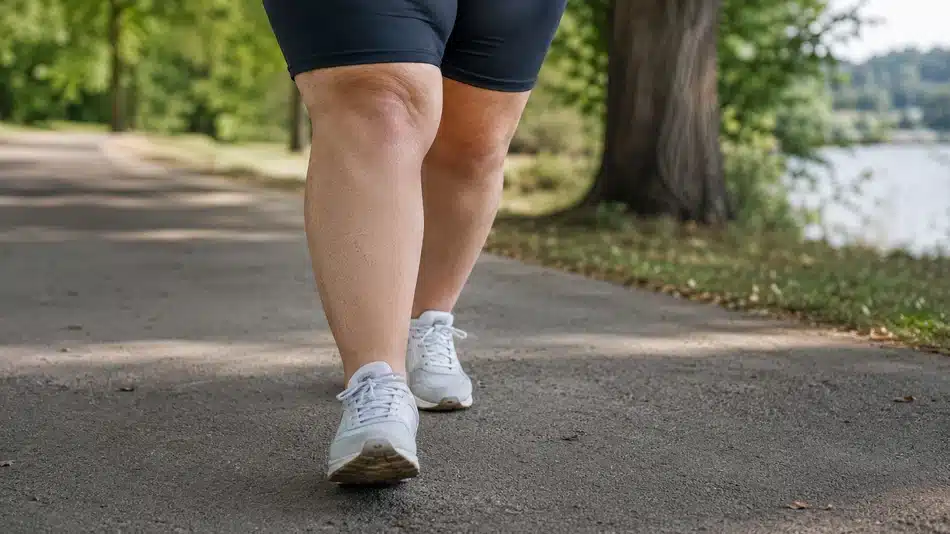
Obesity and excess adiposity are not merely a matter of extra weight on the legs. They can also affect venous return, mobility, tissue swelling and the lymphatic system’s ability to collect excess fluid. This is why some people with obesity develop swollen legs, heaviness, skin changes, more symptomatic varicose veins or swelling that cannot be explained only by a dilated vein.
It is worth saying this from the outset: obesity does not explain every case of swelling, every varicose vein or every case of lymphedema. However, it can act as a factor that worsens venous and lymphatic disease, makes treatment more difficult and reduces mobility, creating a cycle that can be quite hard to break unless it is addressed in an orderly way.
In this article we review what is known about obesity, chronic venous disease, venous thrombosis and lymphedema, and the realistic role of weight loss, exercise, compression and assessment by a vascular surgeon.
Contents
- Why Weight Affects Circulation in the Legs
- Obesity and Chronic Venous Disease
- Obesity and Venous Thrombosis: What We Do Know
- When Swelling Is Also Lymphatic
- Losing Weight Helps, but Does Not Always Cure Swelling
- Exercise, Compression and Treatment: Better Together
- When to See a Vascular Surgeon
- FREQUENTLY ASKED QUESTIONS
Why Weight Affects Circulation in the Legs
Blood from the legs has to return to the heart against gravity. For this to happen, it is not enough for the veins to be open: we also need competent venous valves, good ankle mobility and calf muscles capable of acting as a pump every time we walk.
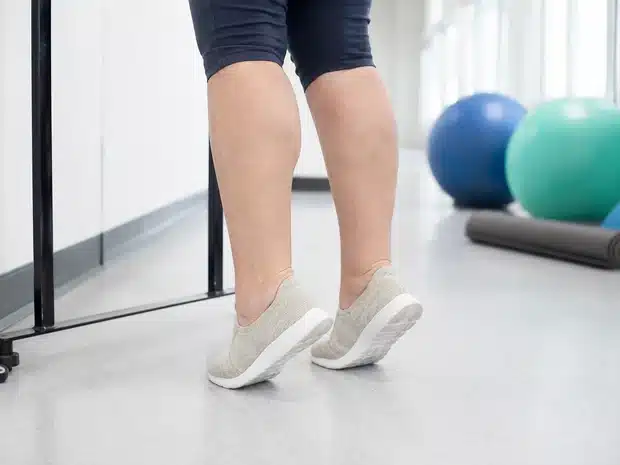
When abdominal fat increases substantially, pressure inside the abdomen may rise and make it harder for blood to return from the legs to the chest. In addition, being overweight is often associated with slower walking speed, less ankle flexion, joint pain, sedentary habits and reduced efficiency of the so-called calf pump.
There is also an inflammatory component. Adipose tissue is not a passive storehouse: it participates in low-grade inflammatory processes, changes in the vascular wall and alterations in the microcirculation. This is why two patients with similar venous ultrasound findings may have very different symptoms if one of them has obesity, limited mobility and chronic swelling.
Obesity and Chronic Venous Disease
The relationship between obesity and chronic venous disease is consistent: the greater the excess weight, the more often we find intense symptoms, swelling, skin changes around the ankle, more advanced varicose veins and a poorer response to some treatments. This does not mean that weight is the only cause of varicose veins, but it can greatly worsen the clinical picture.
One important point is that severity does not always match the amount of venous reflux visible on ultrasound. Some patients with severe obesity, damaged skin or even venous ulcers have superficial reflux that does not, by itself, explain the whole problem. In these cases, we must also consider functional venous hypertension, difficulty with proximal drainage, immobility, heart or kidney disease, medications, lipedema or lymphatic failure.
For this reason, assessment should not stop at “has varicose veins” or “has obesity”. In the vascular clinic we need to examine the patient, perform an appropriate venous Duplex Ultrasound, assess the skin, mobility and the presence of swelling, and, when appropriate, rule out other causes.
Obesity and Venous Thrombosis: What We Do Know
Obesity is associated with a higher risk of a first episode of venous thromboembolism, that is, deep vein thrombosis or pulmonary embolism. The risk increases gradually with Body Mass Index (BMI) and also seems to depend on central adiposity, not only on total body weight.
This does not mean that a person with obesity should receive preventive anticoagulation for that reason alone. In medicine, we should never treat a single number in isolation. Risk is interpreted together with other factors: recent surgery, hospital admission, immobility, cancer, pregnancy, hormonal treatments, personal or family history and the presence of other medical problems.
It is also important to separate the risk of a first event from the risk of recurrence. The evidence on obesity and repeated thrombosis is much less clear, so the duration of anticoagulation is not decided on the basis of weight alone. If you would like to read more about this, here we explain in greater detail what a deep vein thrombosis is and when it should be assessed.
When Swelling Is Also Lymphatic
The lymphatic system collects part of the fluid and proteins that remain in the tissues. When the fluid load exceeds its transport capacity, or when the lymphatic vessels are damaged, swelling becomes more persistent, with a tendency toward fibrosis, skin changes and recurrent infections.
In extreme obesity, an entity called obesity-induced lymphedema has been described. It is not simply “fluid retention from weighing more”, but an objective lymphatic dysfunction that has been confirmed by lymphoscintigraphy in some studies. The likelihood appears to increase at very high BMI ranges, especially above 50-60 kg/m², although these figures come from specialized centers and should not be turned into a rigid cut-off point for every patient.
The practical message is simple: a swollen leg in a person with obesity should not automatically be labelled as “normal because of weight”. There may be venous insufficiency, lymphedema, phlebolymphedema, lipedema, after-effects of thrombosis or other problems. This is why diagnosis must be methodical.
Losing Weight Helps, but Does Not Always Cure Swelling
Weight loss may improve mobility, reduce mechanical load on the legs, make it easier to put on compression garments, reduce systemic inflammation and improve cardiometabolic risk. In chronic venous disease, some studies after bariatric surgery show improvement in swelling, pain and hemodynamic parameters, although they are not perfect trials and do not allow us to attribute all the benefit exclusively to weight loss.
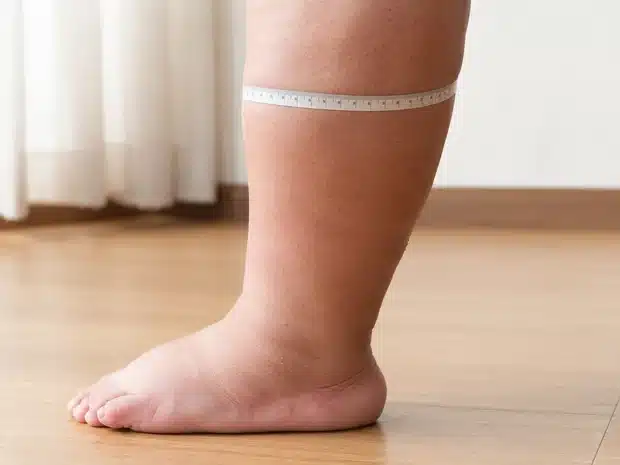
In established lymphedema, even greater caution is needed. Losing weight can help the patient a great deal, but we cannot promise that the lymphatic system will return to normal. There are reported cases in which, despite very substantial weight loss, the lymphatic abnormality persisted. The duration of the condition, fibrosis, previous infections and the degree of structural damage probably all play a role.
For this reason, weight loss should not be presented as a prerequisite for treating venous or lymphatic disease. The reasonable approach is to work in parallel: treat the swelling, protect the skin, prescribe compression when appropriate, improve mobility and address weight with nutritional, medical or surgical support if indicated.
Exercise, Compression and Treatment: Better Together
For years, many patients with swelling were advised to move little “so as not to make the swelling worse”. We now know that this idea, when applied in general, is harmful. Inactivity worsens the muscle pump, promotes weight gain, reduces independence and can aggravate the cycle of swelling, pain and sedentary behavior.
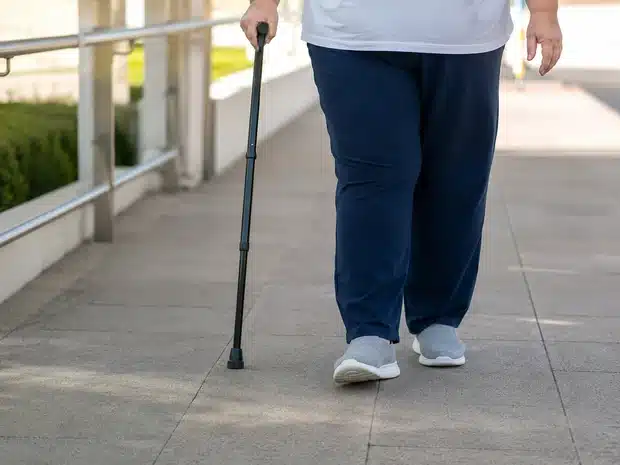
In venous disease, walking, moving the ankle and strengthening the calf help blood flow upward more effectively. In venous ulcers, the available evidence is still limited and each case should therefore be assessed individually. In breast cancer-related lymphedema, progressive strength training has been shown to be safe when introduced gradually and under supervision.
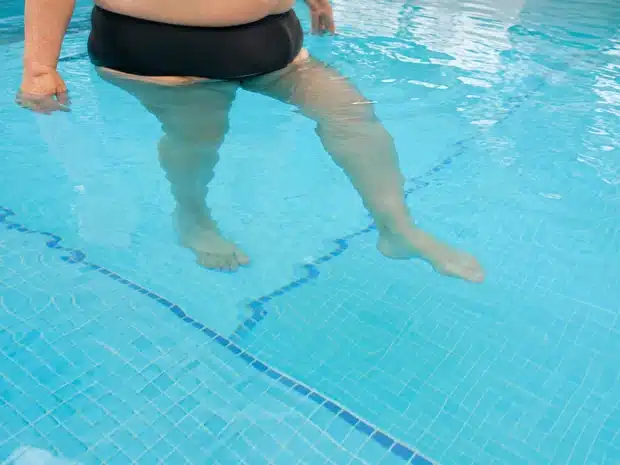
- Start with a dose that can be repeated without worsening symptoms the following day.
- Progress one variable at a time: duration, frequency, load or speed.
- Avoid exercise if there is active cellulitis, fever, an unstable wound, disproportionate pain or suspected thrombosis.
- Use prescribed compression when it has been indicated by a vascular surgeon, especially in venous disease and venous ulcers.
- Check the skin, bandages, garments and feeling of heaviness after exercise.
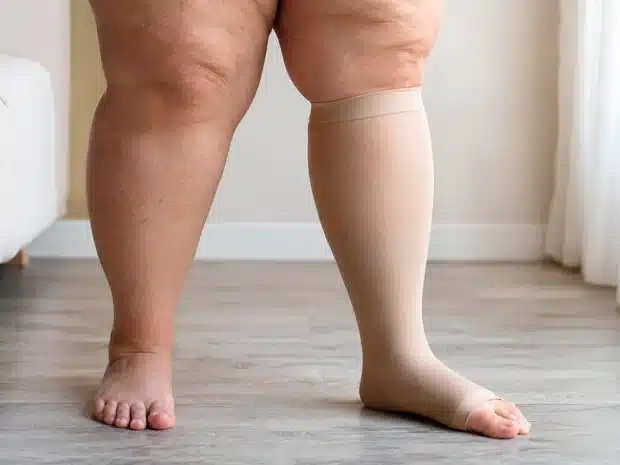
Compression stockings are especially useful when they are well prescribed and combined with movement. External compression and internal muscle contraction reinforce each other. In other words: the stocking helps more when the leg moves.
When to See a Vascular Surgeon
It is advisable to seek advice if there is persistent swelling in one or both legs, progressive increase in volume, significant heaviness, color changes or hardening of the skin, eczema, wounds that take a long time to heal, recurrent infections or varicose veins. A sudden swelling of one leg should also be assessed urgently, especially if it is accompanied by pain, local warmth or shortness of breath.
The purpose of the consultation is not to look for a single label, but to organize the problem: which part is venous, which part may be lymphatic, what role mobility and weight play, what compression is safe, whether venous reflux needs treatment, whether there are after-effects of thrombosis and which measures are realistic for that particular person.
In these cases, the most useful approach is often the least spectacular one: correct diagnosis, small but sustainable goals, appropriate compression, progressive exercise, skin care and vascular treatment when indicated. It is not a one-day solution, but it is a sensible way to improve symptoms, prevent complications and regain functional capacity.
FREQUENTLY ASKED QUESTIONS
Does obesity cause varicose veins?
Not in a single or automatic way. Varicose veins depend on many factors, including individual predisposition and how the venous valves work. Obesity can worsen symptoms, swelling and clinical severity, but it does not explain every case.
Can losing weight cure lymphedema?
It can improve mobility, overall volume, tolerance to compression and quality of life, meaning at least partial improvement. However, it should not be promised that it will completely cure established lymphedema. In some patients, lymphatic dysfunction may persist despite significant weight loss.
Is exercise dangerous if I have lymphedema?
In general, progressive and well-adapted exercise is safe. The important points are to start with low doses, progress little by little, monitor the skin and stop progression if pain, infection, persistent increase in volume or deterioration of a wound appears.
Should I wear compression stockings when exercising?
If the compression is correct, properly indicated and well fitted, it is very useful during walking and exercise, especially in venous disease. It is also useful in lymphedema, although the type of stocking is different.
When does a swollen leg require urgent assessment?
Sudden swelling should be assessed urgently, especially if it affects only one leg and is accompanied by pain, warmth, redness, shortness of breath, chest pain or dizziness. Problems such as deep vein thrombosis or pulmonary embolism must be ruled out.
Should you be interested in getting to know this disease better, and its causes, consequences, how to treat them, and, even better, what can we do to prevent them, you can find it all well explained in the ebook VARICOSE VEINS: Truth & myths.