
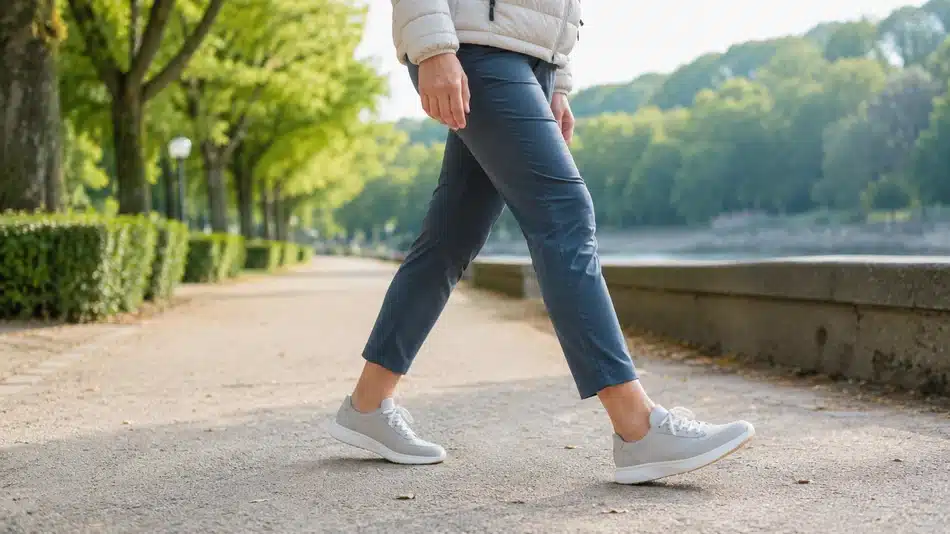
When we talk about supporting venous and lymphatic return, we almost always end up talking about movement. Not major sporting feats, but something much simpler and more physiological: getting the calf, ankle, foot, and breathing to work regularly so that blood and lymph do not stagnate in the legs.
It is worth starting with a clear idea: exercise may improve the function of the muscle and joint pumps, relieve symptoms, and reduce deconditioning, but it does not “cure” varicose veins, repair a diseased venous valve, recanalize a chronic obstruction, or replace compression, anticoagulation, wound care, or vascular treatment when these are indicated.
Even so, when used sensibly, movement is a very valuable tool. We see it every day in the clinic: legs that feel less heavy when patients walk, ankles that swell less when prolonged sitting is interrupted, and patients with venous insufficiency or lymphedema who cope better in everyday life when the program is progressive, realistic, and sustained over time.
Contents
Why the calf is so important
The veins in the legs have to return blood to the heart against gravity. To do this, they rely on venous valves, breathing, pressure changes during walking and, above all, contraction of the calf muscles. That is why we often say that the calf works like a “second heart” for the legs.
Every time we walk, climb stairs, or stand on tiptoe, the gastrocnemius and soleus muscles (the main calf muscles) compress the deep veins of the leg and push blood upward. If the ankle moves very little, if we spend many hours sitting or standing without moving, or if the muscles are weak, this mechanism becomes less effective.
Something similar happens in the lymphatic system. Lymph does not circulate like arterial blood, driven by a powerful central pump. It depends partly on muscle contraction, tissue movement, pressure changes, and the intrinsic contractility of the lymphatic vessels. This is why properly prescribed exercise may help lymphatic transport, although it should not be presented as a cure for lymphedema.
What the current evidence says
The available scientific evidence supports exercise as an adjunctive treatment. This means it adds to other measures, but does not replace them. In chronic venous disease without ulcers, studies show variable improvements in strength, ankle mobility, walking, and calf pump parameters. What they do not show is that exercise eliminates anatomical venous reflux.
In patients with venous ulcers, programs that combine calf exercises and walking together with compression appear to promote healing compared with compression alone. The signal is favorable, although the studies are small and still do not allow us to define a universal program.
After a correctly diagnosed deep vein thrombosis, with anticoagulant treatment in place and clinical stability, early mobilization has not been shown to increase the risk of pulmonary embolism. This does not mean that intense exercise should be performed in the acute phase, but rather that routine absolute bed rest should no longer be prescribed as a rule.
In lymphedema, especially breast cancer-related lymphedema, progressive strength training has been shown to be safe when it starts with low loads and increases gradually. The old idea of generally prohibiting weight lifting has been superseded. It is a different matter that each patient may need an individualized progression.
The most useful exercises for venous return
To support venous return in the legs, the most useful approach is usually to combine three elements: walking, moving the ankle well, and strengthening the calf. There is no need to start with complex programs; in fact, the simpler the plan, the more likely it is to be maintained.
- Walking. This is the venous exercise par excellence. It repeatedly activates the calf pump and is usually well tolerated. In sedentary patients, it can begin with short, frequent walks.
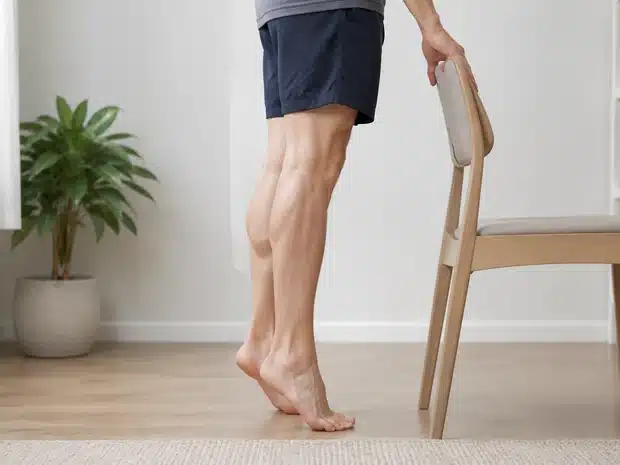
- Heel raises. Standing, with support from a wall or chair, slowly raise and lower the heels. If this is difficult, it can be done seated at first.
- Ankle flexion and extension. Move the foot up and down, using the full comfortable range of motion. It is very useful during travel, sedentary work, or periods of relative immobility.
- Cycling or gentle pedaling. It can be a good alternative when walking causes joint pain or when low-impact exercise is needed.
- Climbing stairs with caution. It activates the calf intensely, but must be adapted to age, knees, hips, balance, and cardiopulmonary capacity.
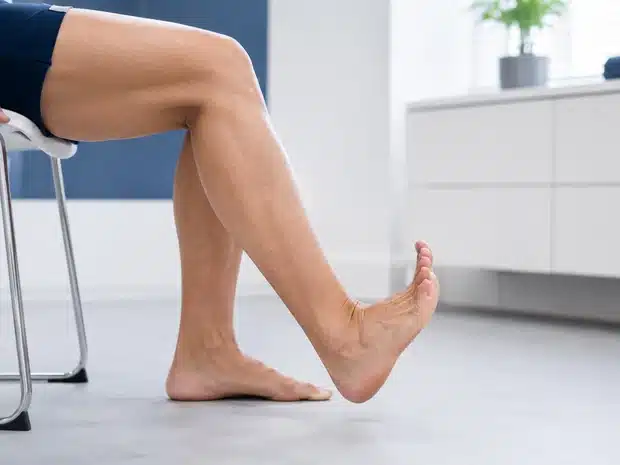
A practical routine for many people with leg swelling, varicose veins, or venous heaviness is to interrupt sitting every 30-60 minutes, do one or two minutes of ankle pumping, and walk for a few minutes if possible. On long journeys, this simple measure makes more sense than remaining still while waiting to arrive.
Exercises that may help with lymphedema
In lymphedema, the goal is not to “squeeze” the limb at any cost, but to improve function, preserve mobility, reduce deconditioning, and observe how volume and symptoms respond. Progression matters more than the initial intensity.
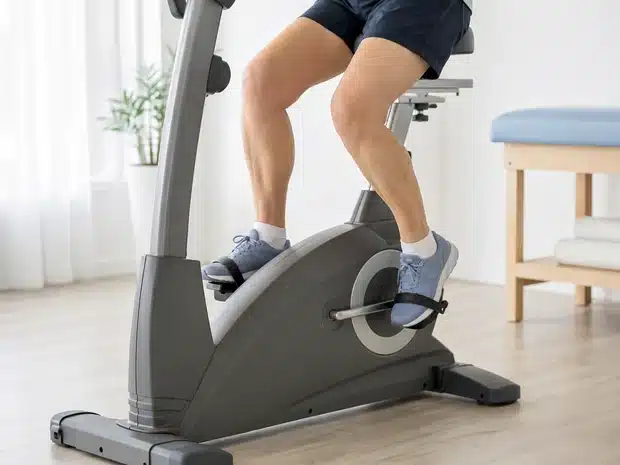
- Low-impact aerobic activity. Walking, stationary cycling, gentle elliptical exercise, or water-based exercise if the skin is intact and there are no open wounds or infection.
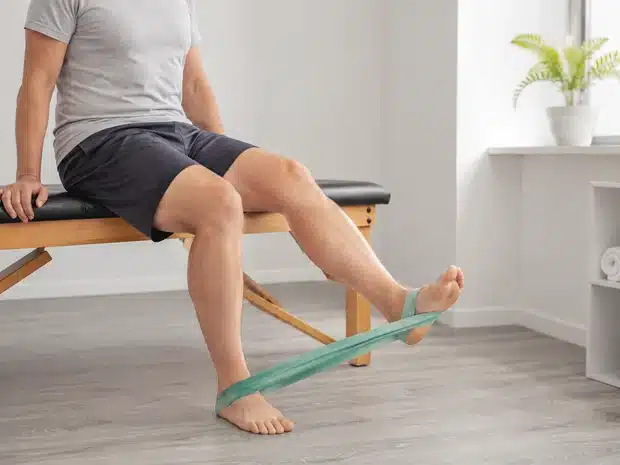
- Progressive strength training. Start with light loads, correct technique, and small increases. The point is not to avoid effort forever, but to introduce it in an orderly way.
- Joint mobility. Ankle, knee, hip, shoulder, or wrist depending on the affected limb. A stiff limb drains worse and is used less effectively.
- Diaphragmatic breathing. It can be used as a warm-up or complement, without attributing miraculous effects to it.
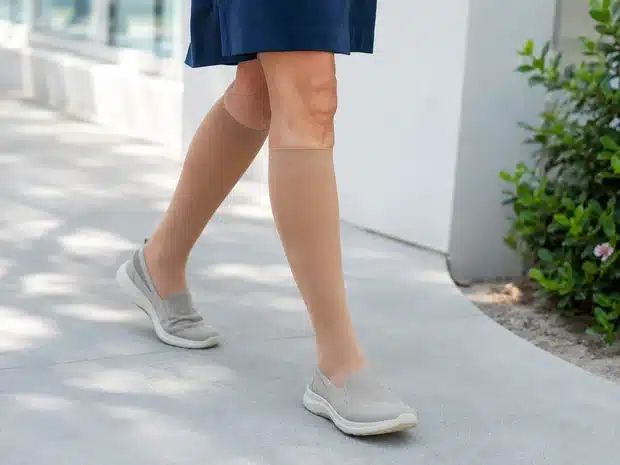
The compression garment is the key ally during exercise, but it must be custom-made.
How to start without overdoing it
The most common mistake is starting with too much ambition. A program that is perfect on paper but impossible to follow is not very useful. A modest routine that the patient can maintain for months is preferable to an intense plan abandoned in the second week.
- Choose a specific goal: less heaviness, longer walking distance, less swelling at the end of the day, better tolerance of the stocking, or functional recovery.
- Start below the threshold of discomfort: few repetitions, short walks, or a light load.
- Progress only one thing at a time: first duration or repetitions, then sets, and finally load.
- Review the response after 24-48 hours: pain, heaviness, increased swelling, skin, tolerance of compression, and fatigue.
- If everything goes well for one or two weeks, increase gradually. If it worsens, return to the previous level and review the cause.
As you can see, the best exercise is not strength training alone, nor is it endurance (“cardio”) alone: it is always the combination of both.
In patients with symptomatic varicose veins, it often makes sense to combine these exercises with hygiene and postural measures and, above all, with compression stockings. Compression is not a punishment: if it is the right compression, it effectively enhances the work of the muscle pump during walking.
When to seek medical advice before exercising
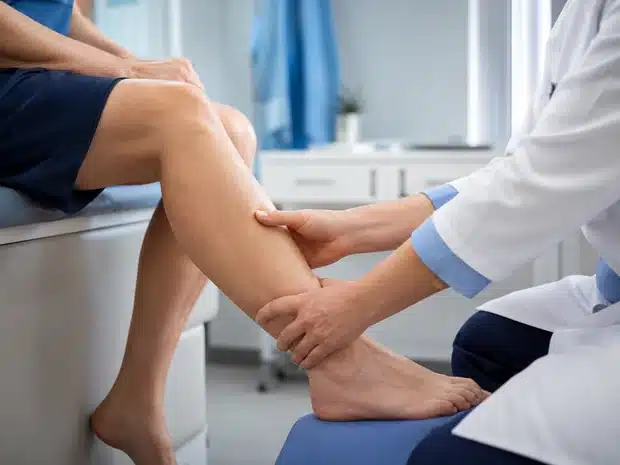
Although movement is usually beneficial, there are situations in which improvising is not advisable. Exercise should not be used as a test to see whether a vascular problem “goes away”. If warning signs appear, the right thing to do is seek medical advice.
- Swelling in only one leg that is recent or develops rapidly, especially if accompanied by deep pain.
- Shortness of breath, chest pain, fainting, or coughing up blood.
- Warm, painful redness of the skin, fever, or suspected infection.
- A wound or ulcer with bleeding, clearly increased exudate, persistent pain, or a displaced dressing.
- Pain at rest, coldness, paleness, or a change in foot color, especially if compression is being used.
- Increased swelling or heaviness lasting more than 24-48 hours after increasing the load.
The case should also be assessed if symptoms are persistent, asymmetrical, or progressive. In venous disease, the venous Duplex Ultrasound allows us to determine whether there is reflux, obstruction, or an anatomy that requires specific treatment. Exercise can help a great deal, but it should not delay a correct diagnosis.
A simple routine for everyday life
As a general guide, a stable person with no medical contraindication and mild venous symptoms may start with a very simple routine: walking 20-30 minutes most days, doing 2-3 sets of heel raises three days a week, and moving the ankles every hour when sitting for a long time.
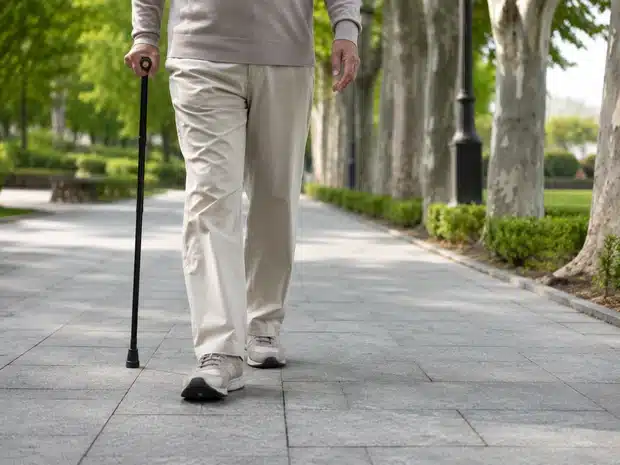
In patients with lymphedema, venous ulcer, post-thrombotic syndrome, arterial disease, heart disease, neuropathy, recent surgery, or cancer treatment, this routine must be adapted. Safety does not depend only on exercise, but also on the diagnosis, compression, skin, wound, medication, and functional capacity.
The best routine is usually not the most sophisticated exercise, but the one that activates the muscle pump, is well tolerated, and can be maintained over time without worsening symptoms.
That is the key: move regularly, progress cautiously, and do not confuse a useful measure with a universal solution. The legs benefit from movement, but vascular medicine requires knowing when movement is enough and when circulation needs to be studied in greater detail.
FREQUENTLY ASKED QUESTIONS
Does walking help improve circulation in the legs?
YES. Walking activates the calf muscle pump and may help reduce heaviness, venous stagnation, and deconditioning. It does not eliminate varicose veins or correct significant venous reflux on its own.
Which exercise is best for venous return?
The most useful ones are usually walking, doing heel raises, moving the ankle frequently, and gentle pedaling. Ideally, they should be combined in a progressive routine adapted to each person.
Can I do strength training if I have lymphedema?
In most cases, YES, provided it is progressive strength training, starting with low loads and increasing gradually. In stable lymphedema, general prohibitions are not justified, but the program must be individualized.
Should I wear compression stockings when exercising?
YES. Using elastic compression stockings (in venous disease) or inelastic containment garments (in lymphatic disease) enhances the effect of physical exercise in improving venous and lymphatic return.
When should I stop and seek medical advice?
You should seek medical advice if sudden swelling of one leg, deep pain, shortness of breath, fever, red and warm skin, clear worsening of a wound, or swelling that persists for more than 24-48 hours after exercise appears.
Should you be interested in getting to know this disease better, and its causes, consequences, how to treat them, and, even better, what can we do to prevent them, you can find it all well explained in the ebook VARICOSE VEINS: Truth & myths.