
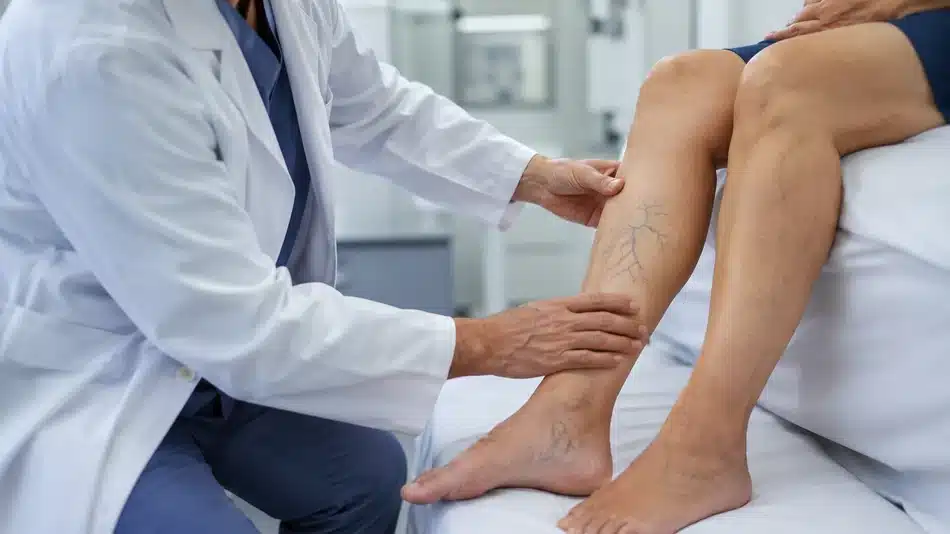
Superficial phlebitis is a relatively common reason for a vascular surgery consultation. Sometimes it appears suddenly, with a red, painful, hardened area on the leg. In other cases, the patient already had visible varicose veins and notices that one of them has become hard, warm, and very painful.
In our clinic, we often see that the word “phlebitis” causes considerable concern, because people automatically associate it with “clots” or serious circulation problems. It is important to clarify this properly: superficial phlebitis and deep vein thrombosis are not the same thing. They may sound similar, but they affect different venous systems and their implications are not always the same.
This does not mean that superficial phlebitis should be taken lightly. Most cases progress well with appropriate assessment and treatment, but early diagnosis is important to confirm how far the problem extends, rule out involvement of deep veins, and decide whether there is an underlying cause that should be studied.
Contents
- What superficial phlebitis is
- Why superficial phlebitis occurs
- Symptoms of superficial phlebitis
- Why early diagnosis is important
- The role of venous Doppler ultrasound
- Varicophlebitis: the special case of varicose veins that thrombose
- General preventive measures
- When to see a vascular surgeon
- Treatment: why it must be individualized
- Have your case assessed
- FREQUENTLY ASKED QUESTIONS
What superficial phlebitis is
Superficial phlebitis, also called superficial venous thrombosis, occurs when a thrombus or clot forms inside a superficial vein. These veins lie closer to the skin and are part of the superficial venous system.
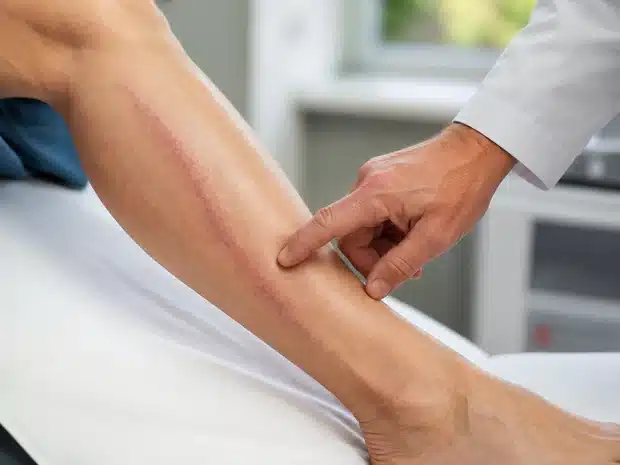
When the clot forms, the vein wall reacts with inflammation. That is why patients often notice pain, redness, local warmth, and a kind of hard “cord” under the skin. In many cases, that cord follows the path of a varicose vein.
Over the years, terms such as phlebitis, thrombophlebitis, varicophlebitis, or varicothrombosis have been used. Today, we tend to speak more precisely of superficial venous thrombosis when the problem affects superficial veins, and deep vein thrombosis when it affects deep veins. This distinction matters because diagnosis, treatment, and follow-up may be different.
Why superficial phlebitis occurs
Superficial phlebitis appears when factors combine that favor the formation of a clot inside a superficial vein. The most common causes include:
Varicose veins or chronic venous disease
Varicose veins are one of the most frequent causes of superficial phlebitis in the legs. In a varicose vein, the vein is dilated and works less effectively. Blood flows more slowly, pools more easily, and the vein wall is altered. All of this favors the formation of a thrombus.
When phlebitis appears in a varicose vein, we usually call it varicophlebitis or varicothrombosis: inflammation of a varicose vein as a result of a thrombus forming inside it.

Slowing of circulation
Prolonged immobility, bed rest, some postoperative periods, or spending many hours without moving the legs can make blood flow more slowly. When venous flow slows down, clots can form more easily.
This does not mean that every sedentary person will develop phlebitis, but the muscle activity of the legs does help venous return. Walking, moving the ankles, and avoiding long periods of immobility are useful general preventive measures.
Conditions with a greater tendency to form clots
Some situations or diseases can make the blood more prone to clotting. These include certain clotting disorders, some inflammatory diseases, malignant diseases, or specific clinical circumstances that should be assessed by a doctor.
In an isolated superficial phlebitis clearly related to varicose veins, complex studies may not be necessary. However, if it appears without an obvious cause, recurs, is extensive, or is associated with other clinical signs, it should be assessed individually.
Venous catheters
Superficial phlebitis can also appear after a catheter is placed in a vein, for example in the arm during a hospital stay or intravenous treatment. The catheter can irritate the vein wall or favor the formation of a local thrombus, especially if it remains in place for a long time or if insertion was traumatic.
Infection
In some cases, an infection can reach the wall of a vein and cause phlebitis. These cases require specific medical assessment, especially if there is fever, rapid worsening, discharge, a poor general condition, or significant local signs.
Symptoms of superficial phlebitis
The most common symptoms of superficial phlebitis are quite characteristic:
- Localized pain along the path of a vein, sometimes intense.
- Redness of the skin.
- Local warmth.
- An area that feels hard to the touch.
- Tenderness or discomfort when bearing weight, walking, or touching the area.
- Localized swelling.
- Appearance of a hard cord under the skin.
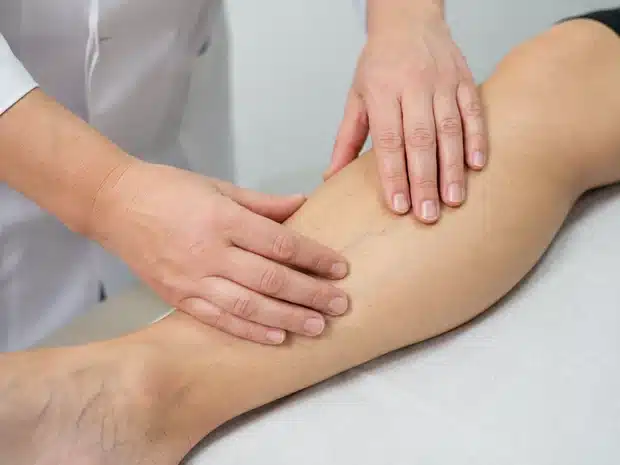
When it occurs in varicose veins, the patient may notice that a vein that used to be soft and visible has become a hard, painful, red cord. Inflammation may also appear over the varicose vein cluster, with local pain and swelling.
Unlike deep vein thrombosis, superficial phlebitis usually causes localized pain, redness, and hardening in a specific area. In deep vein thrombosis, by contrast, swelling of the whole leg or a clear difference between the two legs may be more prominent. Even so, symptoms can overlap, which is why self-diagnosis is not advisable.
Why early diagnosis is important
Early diagnosis has several goals.
The first is to confirm that it really is superficial phlebitis and not another problem. Some skin infections, injuries, muscle problems, or deep vein thromboses can cause symptoms that partially overlap.
The second is to understand the extent of the thrombus. A small, localized phlebitis in a varicose branch far from the deep veins is not the same as an extensive superficial thrombosis or one close to areas where the superficial system connects with the deep system.
The third goal is to rule out complications. Traditionally, superficial venous thrombosis was considered a minor problem compared with deep vein thrombosis. However, we now know that some superficial thromboses can be associated with deep vein thrombosis or, less commonly, pulmonary embolism.
This should not be interpreted in an alarmist way. Most superficial phlebitis cases do not progress seriously, but they should be studied properly, especially when they are extensive, painful, ascending, recurrent, or affect a leg with significant varicose veins.
The role of venous Doppler ultrasound
Venous Doppler ultrasound is a key tool in the assessment of many venous diseases. It allows us to see the veins, check whether there is a thrombus, assess its extent, and analyze how blood is flowing.
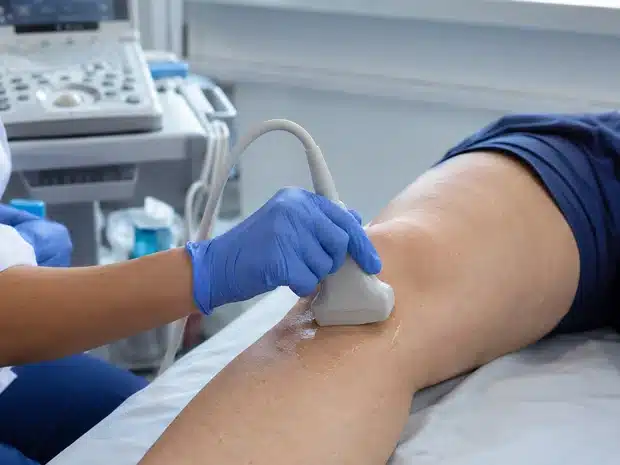
In the context of superficial phlebitis, Doppler ultrasound helps answer important questions:
- Is the thrombus limited to a small superficial vein?
- Does it involve a saphenous vein or another important superficial trunk?
- Is it close to a connection with the deep venous system?
- Is there also deep vein thrombosis?
- Are there varicose veins or venous reflux that explain the problem?
In patients with varicose veins, Doppler ultrasound also makes it possible to plan the later management of the venous disease. It is not only about “seeing the clot”, but about understanding why it happened and what can be done to reduce the risk of new episodes.
You can find more information about this test in the article Venous Doppler ultrasound for varicose veins.
Varicophlebitis: the special case of varicose veins that thrombose
Varicophlebitis deserves a separate explanation because it is one of the typical complications of varicose veins.
A varicose vein is a dilated superficial vein that does not perform its venous return function properly. First its valves fail, then the vein dilates and blood tends to flow less effectively, more slowly in certain segments. This combination of dilation, altered vein wall, and slowed flow favors clot formation.
When the thrombus forms inside the varicose vein, varicophlebitis appears. The patient usually notices a red, hard, painful area over the varicose vein cluster. Sometimes the pain is intense, although very localized. In other cases, the inflammation advances along the path of the vein over several days.
The main implication of varicophlebitis is that the acute episode is not the only issue to treat. The underlying venous disease should also be assessed. If the varicose veins remain and venous reflux continues, new episodes often develop in the future.
For this reason, after varicophlebitis, assessment by a vascular surgeon is necessary, and treatment of those varicose veins is often recommended to prevent further episodes of varicophlebitis.
General preventive measures
Prevention depends greatly on the underlying cause. Phlebitis caused by a catheter in the arm is not the same as varicophlebitis in a leg with significant varicose veins. Even so, there are general measures that help care for venous circulation:
Maintain an active lifestyle
Walking regularly encourages the calf muscles to work; they act as a natural pump that helps venous return. For people who spend many hours sitting or standing, taking breaks to walk or move the ankles is useful.
Avoid prolonged immobility
On long journeys, during extended periods sitting, or during rest periods, it is advisable to move the legs, perform ankle flexion and extension exercises, and get up to walk whenever possible.
Maintain good hydration
Adequate hydration helps prevent the blood from becoming overly concentrated, especially in hot weather, on long journeys, with fever, or in situations with greater fluid loss.
Control weight
Excess weight can worsen venous return in the legs and increase symptoms of venous insufficiency. Maintaining a healthy weight helps reduce the burden on the venous system.
Avoid prolonged direct heat
Heat favors venous dilation and can worsen symptoms of venous insufficiency. In patients with varicose veins or heavy legs, it is usually advisable to avoid saunas, prolonged sun exposure, or direct heat sources on the legs.
Use compression stockings
Compression stockings are extremely useful in patients with varicose veins, venous insufficiency, jobs that require prolonged standing, or certain venous episodes. But not all stockings are the same, and not all are suitable for every patient. Ideally, the type, size, and compression level should be prescribed by a professional.

Assess varicose veins before they cause complications
When varicose veins are large, symptomatic, or have caused varicophlebitis, it is worth having a vascular assessment. The goal is not only to improve the appearance of the leg, but to reduce symptoms and prevent possible complications.
When to see a vascular surgeon
You should see a vascular surgeon if you have a red, painful, hardened area over a vein in the leg, especially if you have varicose veins.
It is also advisable to request an assessment if:
- The pain or redness increases.
- The inflamed area moves upward along the leg.
- The phlebitis is extensive.
- There is significant swelling of the whole leg.
- One leg is clearly more swollen than the other.
- Shortness of breath, chest pain, or severe malaise appears.
- You have had repeated episodes.
- The phlebitis appears without a clear cause.
- You have a personal history of thrombosis.
- You are pregnant or in the postpartum period.
- There is fever or suspected infection.
- You have significant varicose veins that have never been studied with Doppler ultrasound.
In the event of respiratory symptoms, chest pain, loss of consciousness, sudden swelling of the whole leg, or a poor general condition, assessment should be urgent.
Treatment: why it must be individualized
Treatment for superficial phlebitis depends on its location, extent, symptoms, proximity to the deep venous system, the patient’s history, and whether varicose veins are present.
In mild, localized cases, conservative measures, anti-inflammatory medication if indicated, compression, and even a few days of low-dose anticoagulant treatment may be sufficient. In other cases, more specific treatment may be necessary, including full-dose anticoagulation. The decision should be made after medical assessment by a specialist, not only based on how the leg looks externally.
In varicophlebitis, once the acute episode has resolved, the responsible varicose veins should be studied and treated. Techniques such as radiofrequency, VenaSeal®, or other options may be indicated in certain patients with venous insufficiency, always after individual assessment and planning with venous Doppler ultrasound. There is no universal technique for every case: what matters is choosing the right option for each venous anatomy, symptoms, and clinical situation.
Have your case assessed
If you have noticed a red, hard, painful vein, or if you have varicose veins and have had an episode compatible with varicophlebitis, the most prudent step is to have a vascular assessment as soon as possible. Early diagnosis makes it possible to confirm the problem, rule out deep involvement, decide on the most appropriate treatment, and start it immediately.
The information in this article is general and does not replace a medical consultation. Each case should be assessed individually by a healthcare professional.
FREQUENTLY ASKED QUESTIONS
Is superficial phlebitis the same as deep vein thrombosis?
NO. Superficial phlebitis affects superficial veins, which are closer to the skin. Deep vein thrombosis affects deep veins, which carry most of the venous return from the leg. They are different problems, although in some cases they can coexist or be related.
Can superficial phlebitis be dangerous?
In many cases it is a localized problem with a favorable course, but it should not be trivialized. Some superficial thromboses can extend or be associated with deep vein thrombosis. That is why it is important to assess their extent and location.
How do I know if what I have is phlebitis?
Typical signs are pain, redness, warmth, and a vein that feels like a hard cord under the skin. Even so, the diagnosis should be confirmed by a professional, especially if the symptoms are intense, extensive, or appear in a leg with varicose veins. Self-diagnosis should never be attempted, because not all these symptoms always appear, nor do they always appear in a fixed combination.
What is varicophlebitis?
It is phlebitis that appears inside a varicose vein. In other words, a clot forms in a varicose vein, causing inflammation, pain, hardening, and redness over that area.
Should I rest completely?
This should not be decided without medical assessment. In many venous problems, avoiding prolonged immobility is recommended, but each case must be individualized. If deep thrombosis is suspected or other risk factors are present, it is necessary to follow the doctor’s instructions.
Can it happen again?
Yes, especially if there are significant varicose veins or an untreated underlying venous disease. That is why, after the acute episode and after a Doppler ultrasound study by your vascular surgeon, more definitive treatment of the varicose veins may be recommended.

Should you be interested in getting to know this disease better, and its causes, consequences, how to treat them, and, even better, what can we do to prevent them, you can find it all well explained in the ebook VARICOSE VEINS: Truth & myths.