

Preparing properly for your first vascular appointment allows us to spend more time on what really matters: understanding what is happening, examining your legs carefully and deciding what you need. You do not need to arrive with a diagnosis or use medical terminology. You simply need to explain what you have noticed, when it started and what concerns you most.
At Clínica Vascular Dr. Jorge Molina, we organise this first visit as a high-resolution consultation. Dr Molina will personally conduct the interview and examination and, when appropriate for your condition, perform a venous Duplex Ultrasound. With all this information, he will explain the diagnosis, the treatment options and the next steps. If treatment is recommended, it is usually scheduled for a separate appointment so that you can decide without feeling rushed.
Preparation is simple. This article explains what is helpful to write down, which documents to bring, what clothing and footwear to wear, and what to expect from your visit.
Contents
- Before you come: make a short note
- Medical history, medication and reports to bring
- What to wear for your leg examination
- If you use compression stockings, wear them to your appointment
- What special preparation is not required
- What happens during a high-resolution consultation
- What to remember for different reasons for consultation
- Checklist before leaving home
- When you should not wait for your scheduled appointment
- FREQUENTLY ASKED QUESTIONS
Before you come: make a short note
You do not need to recall your entire medical history from memory. A note on your phone or on paper with the main details is usually enough. Approximate dates and a description in your own words are helpful.
Start with the main reason for your appointment:
- what change, symptom or concern prompted you to make an appointment;
- whether it affects one leg or both;
- when it started;
- whether it appeared suddenly or gradually;
- what makes it worse or relieves it;
- whether it changes throughout the day;
- how it affects your work, sleep, exercise or other activities.
Depending on your situation, it may be helpful to remember whether an operation, hospital admission, period of immobility, pregnancy, long journey, injury or change in medication occurred around the time the problem began. Not all these details are relevant to everyone: the aim is to gather clues like a detective, not to complete a questionnaire.
Also choose two or three questions you would like answered. For example: “What might explain these symptoms?”, “Do I need any additional tests?” or “What treatment options do I have?”

Medical history, medication and reports to bring
Write down your known medical conditions, allergies, operations and any important previous hospital admissions. Previous episodes of thrombosis, pulmonary embolism, phlebitis or ulcers, and earlier treatment for varicose veins, spider veins, lymphoedema or lipoedema are particularly relevant to a vascular assessment. If you cannot remember the exact name of a procedure, do not try to guess: the corresponding report will be more useful.
Prepare an up-to-date list of all the medication you take, not only medication related to your legs. Include the name, dose and frequency, as well as anticoagulants, antiplatelet drugs, contraceptives or other hormone treatments, occasional medicines, vitamins and supplements.
Do not stop or change any medication on your own before coming to the appointment. Your first visit and a routine venous Duplex Ultrasound of the legs do not require any changes to your treatment.
On the day of your appointment, bring any documents you already have that relate to the current problem:
- Reports from consultations, emergency visits, hospital admissions, discharges and operations.
- Reports on previous vascular treatments and how your condition progressed afterwards.
- Reports from previous Duplex Ultrasound scans, CT scans, magnetic resonance imaging (MRI) and other relevant tests.
- The original images from those tests, if you still have them and can access them, as well as the written report.
- Blood test results or other relevant studies that have already been requested.
Arrange them by date and keep the most recent ones close at hand. If you are bringing them on your phone, check beforehand that the files open correctly. You do not need to arrange any new tests yourself or have a complete set of records in order to be seen.

What to wear for your leg examination
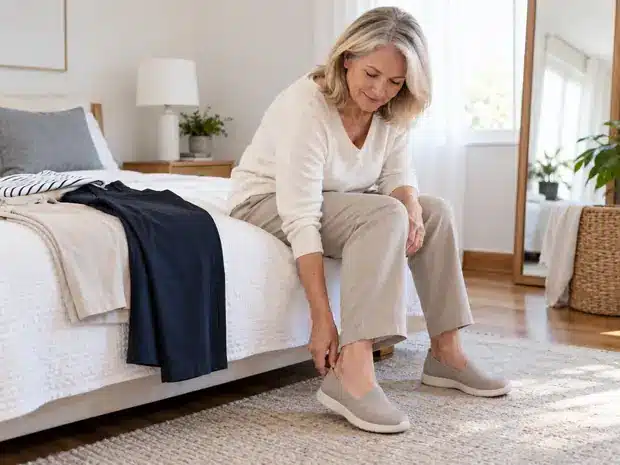
During a venous assessment, it is usually necessary to examine both legs in full, from the groin to the feet, even if the problem is confined to one area. The most practical choice is therefore clothing and footwear that are easy to remove and put back on. Trousers that can only be rolled up to the knee do not allow a complete examination.
Please wear underwear to your appointment. This allows us to examine your legs and groin when necessary while keeping your intimate area covered. You do not need to buy any special clothing.
If possible, avoid one-piece garments, very tight trousers or footwear that is difficult to remove. Sometimes a long dress can be more awkward than comfortable trousers. If you have limited mobility or need help undressing, changing position or standing, please mention this when booking your appointment.
If you use compression stockings, wear them to your appointment
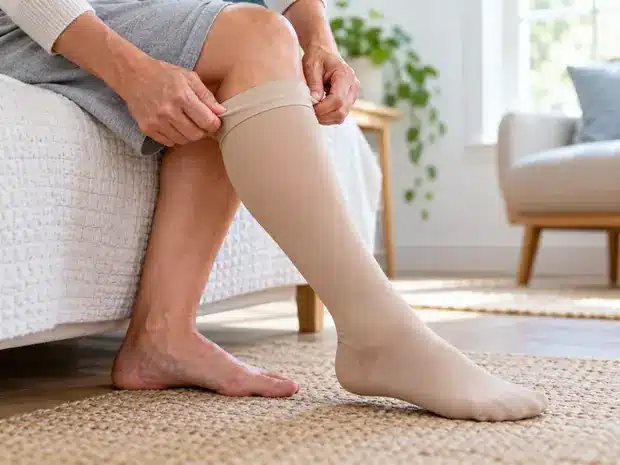
If you use compression stockings, you should come wearing them as you normally do. Do not remove them several hours beforehand in an attempt to make your leg appear more swollen.
Dr Molina will remove them for the examination and help you put them back on afterwards. Seeing the garment you use allows him to check whether its length, size, fabric and compression level are appropriate for your condition. Since not all compression stockings are the same, this information can be very valuable: it allows us to check whether the stockings you are using are the most suitable for your specific problem. We very often see people wearing the wrong type of stockings.
If you still have the packaging or label, you can bring it with you. It may also be helpful to remember who recommended the stockings, how long you have been using them and whether they help or cause any discomfort. If you do not use compression stockings, you do not need to buy any before your appointment.
What special preparation is not required
For this first appointment and a routine venous Duplex Ultrasound of the legs, you do not need to fast. You can eat and drink normally, use your usual creams and take your prescribed medication.
You also do not need to wax, shave or do anything to make the veins more visible. These instructions apply to a routine vascular appointment; a procedure or a different type of test may have its own specific instructions, which will be provided to you.
What happens during a high-resolution consultation
The visit begins with a conversation about why you have come, how the problem has developed, your medical history, your medication and any documents you have brought. Some questions will be open-ended so that you can explain what has happened; others will be more specific to clarify dates, affected areas or previous treatments.
Your legs and any other relevant areas will then be examined. Depending on the problem, Dr Molina may assess visible veins, the distribution of swelling, the skin and underlying tissues, wounds or pulses. Some parts of the examination are carried out while you are standing and others while you are lying down. If a position causes pain, dizziness or difficulty, let him know at the time.
When indicated, Dr Molina performs a venous Duplex Ultrasound during the same visit. This is an ultrasound examination that uses gel and a probe placed on the skin to assess the veins and how blood flows through them. It does not use ionising radiation, needles or contrast agents. It may require moderate pressure, but it is generally completely painless.
A venous Duplex Ultrasound can detect venous reflux, thrombosis or the after-effects of thrombosis, but it is always interpreted alongside the clinical history and physical examination. On its own, it cannot identify every cause of pain or swelling; nor can it confirm lipoedema by itself, and a normal venous result does not automatically rule out lymphoedema.
At the end of the visit, Dr Molina will explain what he has found, which of your symptoms may be related to those findings and whether any further assessment is needed. If treatment is indicated, he will discuss the different options that are suitable for your particular case, their advantages and limitations, and the next steps. The purpose of the first appointment is to assess your condition and help you decide; it does not mean that a procedure will be carried out that same day.
What to remember for different reasons for consultation
The general preparation described above applies to any first visit. Add the following information only if it is relevant to your situation:
- Varicose veins or spider veins: when they appeared, how they have changed, whether they cause symptoms and what previous treatments you have received. A cosmetic concern is also an entirely valid reason to seek advice.
- Previous thrombosis or phlebitis: the approximate date, the affected leg, the circumstances in which it occurred, the treatment you received and any lasting effects. Bring any available reports and Duplex Ultrasound results.
- Persistent swelling: whether it affects one or both legs, whether it includes the foot or toes, how it changes throughout the day (especially whether it improves after a full night lying down), and whether it appeared gradually or suddenly. Not all leg swelling is caused by a venous problem.
- Possible lymphoedema: operations involving lymph nodes, radiotherapy, repeated skin infections, injuries, and previous compression or decongestive treatments. You can find more information in our article about lymphoedema.
- Possible lipoedema: when the change in limb volume began, its distribution, pain or tenderness, frequent bruising, and any changes that coincided with hormonal stages. The diagnosis is clinical, and you do not need to arrive with a confirmatory test. We explain its features in our guide to lipoedema.
- Wounds or ulcers: when they appeared, the wound care you have received, previous episodes and any dated photographs you already have. Do not remove complex dressings or alter the prescribed wound care solely for the appointment.
Checklist before leaving home
Before you leave, review this short checklist:
- I can explain what concerns me, when it started and how it has changed.
- I have written down my medical history, operations, allergies and important vascular episodes.
- I have a complete list of my medication, including doses and frequency.
- I am bringing the available reports and test results related to my problem.
- I am wearing clothing and footwear that are easy to remove and put back on, as well as underwear.
- If I use compression stockings, I am wearing them to the appointment.
- I have prepared my two or three most important questions.
- I have checked the date, time and address of the appointment provided in our written message.
If you need support with mobility, hearing, vision, memory or communication, it is helpful to let us know. It may also be advisable to bring someone you trust if this will help you explain what has happened or remember the instructions you receive, subject to the clinic’s privacy and organisational policies.

When you should not wait for your scheduled appointment
New and sudden swelling, especially in one leg and accompanied by pain, warmth or a change in colour, requires urgent medical assessment. Do not wait for a routine appointment to rule out thrombosis or another acute cause.
If you also develop sudden shortness of breath, chest pain, fainting or coughing up blood, call 112. Urgent assessment is also required for bleeding from a varicose vein that does not stop, a leg that suddenly becomes cold or pale, a sudden loss of strength or sensation, or rapid deterioration. Do not delay care while gathering reports or completing your preparation.
If you find yourself in any of these situations, go to the EMERGENCY DEPARTMENT or call 112. The priority is to determine whether the problem is serious or urgent and to begin treatment as soon as possible. Once the acute phase has been dealt with, you can make an appointment with us to review everything and continue your follow-up.
FREQUENTLY ASKED QUESTIONS
Do I need to fast before the appointment?
No. You can eat and drink normally before your first appointment and a routine venous Duplex Ultrasound of the legs.
Should I change or stop any of my medication?
No. Take your prescribed medication as usual unless a doctor has given you specific instructions to do otherwise.
Should I wear my compression stockings to the appointment?
Yes, if you normally use them. Dr Molina will remove them for the examination, assess whether they are suitable and help you put them back on.
What if I do not have any previous reports or test results?
You can still attend. Bring only what you already have; you should not arrange tests yourself in preparation for the visit.
Will I have a venous Duplex Ultrasound at my first appointment?
During our high-resolution consultation, a venous Duplex Ultrasound is performed at the same visit when it is relevant to the reason for consultation. The decision is individualised because not every problem requires exactly the same examination.
Will I be treated that same day?
The first visit is devoted to the interview, examination, assessment and explanation of the diagnosis and available options. If treatment is indicated, it is usually scheduled for a later appointment.

Should you be interested in getting to know this disease better, and its causes, consequences, how to treat them, and, even better, what can we do to prevent them, you can find it all well explained in the ebook VARICOSE VEINS: Truth & myths.